
TL;DR: In Georgia, you are legally required to report any car accident that results in an injury, a death, or property damage of $500 or more. Because it is nearly impossible to accurately estimate vehicle damage at the scene, the safest and most recommended course of action is to always call the police, even for what appears to be a minor incident. An official police report creates a neutral, factual record of the event, which is essential for protecting your rights, filing a successful insurance claim, and preventing future disputes with the other driver.
Key Highlights
- The Legal Mandate: Georgia law O.C.G.A. § 40-6-273 requires you to report any accident involving injury, death, or at least $500 in property damage.
- The $500 Damage Illusion: Modern vehicle repair costs are high. A seemingly small dent or cracked bumper can easily exceed the $500 threshold, often hiding more expensive structural or sensor damage.
- The Power of a Police Report: This official document provides an unbiased account of the accident, which is critical evidence for insurance adjusters when determining fault and processing your claim.
- Protecting Yourself from Fraud: Calling the police prevents the other driver from changing their story later, falsely claiming injuries, or denying the accident occurred.
- Delayed Injuries are Real: Adrenaline can mask pain at the scene. What feels like a minor jolt can lead to whiplash or soft tissue injuries that appear hours or days later. A police report documents the incident in case this happens.
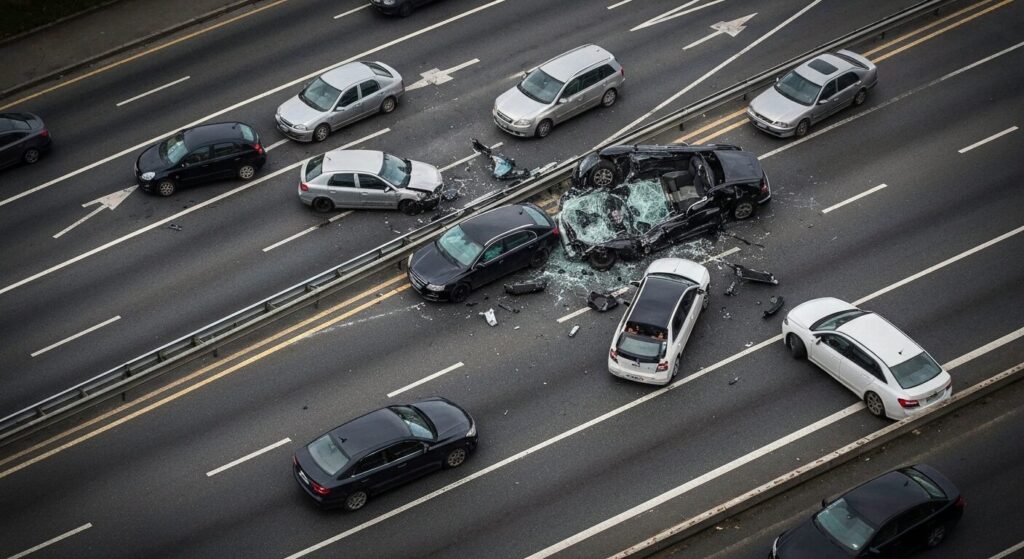
Every year, Georgia’s roadways see hundreds of thousands of vehicle collisions. According to the Georgia Department of Transportation (GDOT), there were over 330,000 total crashes in a recent year, a significant portion of which were classified as involving only property damage. While major collisions on busy corridors like I-75 in Atlanta or I-20 near Augusta grab headlines, the far more common event is the minor fender bender in a parking lot or a low-speed bump in stop-and-go traffic. These incidents leave drivers standing on the roadside, asking themselves a critical question.
The answer is governed by state law, specifically the Official Code of Georgia Annotated (O.C.G.A.) § 40-6-273. This statute lays out the specific duties for a driver involved in a collision. It mandates that a driver must immediately, “by the quickest means of communication,” report an accident to the local police department or county sheriff’s office if the incident results in injury or death to any person or property damage of $500 or more. This legal threshold seems straightforward, but it contains complexities that can have serious financial and legal consequences for those who misinterpret it.
While the law provides a clear directive, the practical application in the moments following a crash is what truly matters. The decision of whether to pick up the phone and dial 911 or the local non-emergency number is one of the most important choices you will make. This decision sets the stage for everything that follows, from the insurance claim process to your ability to recover compensation for damages and potential injuries. Understanding why the law exists and how a police report functions as your primary piece of evidence is key to making the right choice for your protection.
Understanding Georgia’s Accident Reporting Law (O.C.G.A. § 40-6-273) in Detail
At its core, Georgia’s accident reporting law is designed to create an official record for public safety and to provide a clear starting point for insurance and legal matters. However, the specific clauses within the law can be misleading for the average person standing on the side of the road, trying to assess a stressful situation. A deeper look at its components reveals why simply “handling it without police” is a risky proposition.
The $500 Property Damage Threshold: Why It’s Deceptive
The $500 figure was established years ago and has not kept pace with the rising costs of automotive repair technology. In today’s world, it is exceptionally difficult to have a collision with another vehicle that results in less than $500 worth of damage.
Consider these common repair costs for a modern vehicle:
- Bumper Repair: A simple crack in a plastic bumper cover might seem minor. But these bumpers often contain sensors for parking assist, blind-spot monitoring, and automatic emergency braking. Replacing and recalibrating a single sensor can cost several hundred dollars, while a full bumper replacement with paint can easily range from $900 to over $2,000.
- Headlight Assembly: A cracked headlight is not just a broken piece of plastic. Modern LED or Xenon headlight assemblies are complex electronic components. Replacing one on a standard sedan can cost between $500 and $1,500.
- Paint Damage: A deep scratch across a door or fender might not look like much. However, to fix it properly, a body shop must sand, prime, and repaint the entire panel to ensure the color matches perfectly. This type of cosmetic work often starts at $500 to $600 per panel.
- Hidden Damage: The most significant danger is the damage you cannot see. A low-speed impact can bend a vehicle’s frame, damage a radiator support, or knock a wheel out of alignment. These issues are not visible to the naked eye but can cost thousands to repair and compromise the safety of your vehicle.
Because of these factors, assuming damage is under $500 is a gamble you are likely to lose. An auto body professional is the only person qualified to make that assessment, and you won’t have one at the scene of the crash.
The “Apparent” Injury Clause
The law requires a report if there is an “injury.” But what constitutes an injury at the scene? In the moments after a collision, your body is flooded with adrenaline. This powerful hormone can mask pain and make you feel perfectly fine, even if you have sustained a serious injury.
Common delayed-onset injuries include:
- Whiplash: A neck injury caused by a forceful back-and-forth motion. Symptoms like neck pain, stiffness, and headaches may not appear for 24-48 hours.
- Soft Tissue Injuries: Sprains and strains to muscles and ligaments in the back, shoulders, and knees can take time to become painful and swollen.
- Concussions: A mild traumatic brain injury can result from your head striking the headrest or window. Symptoms like confusion, dizziness, and memory problems may not be immediately obvious.
If you tell the other driver “I’m fine” and agree not to call the police, you are creating a situation where it becomes much harder to prove your injuries are related to the crash if pain develops later. When a police officer responds, they will ask if anyone is injured. Stating that you have even minor pain (e.g., “my neck is a little sore”) gets this fact into the official report, creating a crucial link in the chain of evidence.
What “By the Quickest Means of Communication” Actually Means
This legal phrase simply means you need to call for help without delay. In most cases, this is your cell phone. The number you should call depends on the severity of the situation.
- Call 911 if:
- Anyone is clearly injured.
- The vehicles are disabled and blocking traffic.
- There is a fire, leaking fuel, or other immediate hazards.
- The other driver is hostile or appears to be under the influence of drugs or alcohol.
- Call the non-emergency police line if:
- The accident is a minor fender bender.
- The vehicles have been safely moved to the side of the road or are in a parking lot.
- No one is complaining of injuries.
Regardless of which number you call, making the call fulfills your legal duty and starts the process of creating an official record.
The Critical Role of a Police Report in Your Insurance Claim
Some people avoid calling the police because they believe it will complicate things or automatically make their insurance rates go up. In reality, the absence of a police report is what truly complicates matters. This single document is the foundation of a smooth and fair insurance claim process.
An Official, Unbiased Record of the Incident
When you file a personal injury claim, your insurance adjuster’s job is to determine what happened, who is at fault, and how much the claim is worth. Without a police report, they only have your version of the story and the other driver’s version. Unsurprisingly, these stories often conflict.
A Georgia Uniform Motor Vehicle Accident Report provides a neutral, third-party account of the facts. The responding officer is trained to document objective information, including:
- Date, time, and specific location of the crash.
- Driver and passenger names, contact information, and driver’s license numbers.
- Vehicle information, including make, model, and license plate.
- Insurance company and policy numbers for all parties.
- A diagram of the accident scene and the position of the vehicles.
- A written narrative of how the accident occurred, based on driver and witness statements.
- Any citations issued (e.g., for following too closely or failure to yield).
- The officer’s opinion on contributing factors to the collision.
This report consolidates all the essential information into one place, making it an invaluable tool for your insurance adjuster.
Establishing Fault and Liability
Georgia is an “at-fault” state for car insurance. This means the driver who is responsible for causing the accident is also responsible for paying for the damages through their liability insurance. Proving the other driver was at fault is the most critical step in getting your claim paid.
While a police report does not legally assign fault in a civil case, it is the single most persuasive piece of evidence an insurance adjuster will consider. If the other driver was issued a ticket for a traffic violation, it creates a strong presumption of fault. The officer’s narrative and diagram can clearly show who had the right of way or who made an improper maneuver. Without this report, you are stuck in a “he said, she said” argument where the other driver can easily deny responsibility, leaving your claim delayed or even denied.
How a Police Report Speeds Up the Claims Process
Imagine this scenario: You are in a minor rear-end collision. The other driver is apologetic and admits it was their fault. You decide not to call the police and just exchange insurance information. A week later, you get a call from their insurance company. The other driver has told them that you slammed on your brakes for no reason, making the accident your fault.
Now, you have a major problem. There are no witnesses and no police report to back up your side of the story. Your claim is now contested and will be delayed for weeks or months while the insurance companies investigate. It may even be denied entirely.
If you had called the police, the officer would have documented the positions of the cars and likely noted the other driver’s admission of fault in the report narrative. With that report in hand, the claim would be straightforward, and you would likely have a check for your repairs in a fraction of the time.
What to Do When the Other Driver Doesn’t Want to Call the Police
It is a common occurrence. After a minor collision, the other driver may try to persuade you not to involve law enforcement or insurance companies. They will offer a variety of excuses, but you should view these attempts with extreme caution. Their goal is to serve their own interests, not yours.
Common Excuses and Why You Should Be Cautious
Be prepared to hear one of these arguments and understand the real reason behind it:
- “Let’s just handle this with cash. I’ll give you a few hundred dollars.”
- The Problem: The cash they offer will almost certainly not be enough to cover the full cost of repairs, especially if there is hidden damage. Furthermore, a cash settlement cannot compensate you for a potential injury that appears later. Once you take the cash, you have no further recourse.
- “If we call the police, my insurance rates will go up.”
- The Problem: This is their concern, not yours. Your primary responsibility is to protect your own financial and physical well-being. Sacrificing your rights to save them a few dollars on their premium is a bad trade.
- “I’m in a huge hurry and don’t have time to wait for the police.”
- The Problem: A car accident is a serious event, and documenting it properly is more important than their schedule. If they are in such a rush, it may be because they have something to hide.
- “I don’t have my license or insurance card with me.”
- The Problem: This is a massive red flag. The driver may be unlicensed, uninsured, or driving a stolen vehicle. They might even have an outstanding warrant for their arrest. In this situation, you absolutely must call the police.
How to Respond Firmly but Politely
You do not need to get into an argument. Stay calm and be assertive. You can say something clear and direct:
“I understand your concern, but for both of our protection, I think it’s best to get an official report. Georgia law requires it if the damage is over $500, and I’m not an expert at estimating repair costs. It’s the proper way to handle this.”
If the other driver becomes aggressive or tries to leave the scene, do not try to stop them. Your safety is the top priority. Instead, immediately note their license plate number, the make and model of their car, and a description of the driver. Then, call 911 and inform the dispatcher that you were in an accident and the other driver is leaving the scene. This is a hit-and-run, which is a serious crime.
The Dangers of a “Handshake Agreement”
Agreeing to handle an accident “off the record” is built on a foundation of trust with a complete stranger who just hit your car. This is a poor foundation for a financial transaction. The risks are immense:
- The other driver could take your information and later file a claim with their insurance company, alleging that you were at fault.
- They could claim they sustained injuries from the crash.
- They could promise to send you money for repairs and then disappear, leaving you with no way to track them down.
Without a police report, you have no credible evidence to defend yourself against these fraudulent claims.
Step-by-Step Guide: Actions to Take Immediately After a Minor Wreck
Knowing what to do in the minutes after a collision can protect your safety and your legal rights. Follow these steps methodically.
- Ensure Safety First. If the accident is minor and the vehicles are drivable, Georgia’s “Move Over” law requires you to move them to the shoulder or a safe nearby location out of the flow of traffic. Turn on your hazard lights.
- Check for Injuries. Assess yourself and your passengers for any pain or discomfort. Even if you feel fine, take a moment to be sure. Adrenaline can mask injuries.
- Call the Police. As discussed, this is the most critical step. Dial 911 for emergencies or the local police non-emergency number for minor, non-blocking incidents. Provide the dispatcher with your exact location.
- Exchange Information. While waiting for the officer, exchange the following information with the other driver. Do not rely on a verbal exchange; ask to see the physical documents and take photos of them with your phone.
- Full Name and Address
- Phone Number
- Driver’s License Number
- Insurance Company and Policy Number
- License Plate Number
- Document Everything. Use your smartphone to become your own investigator. Take more photos and videos than you think you need. Capture:
- Damage to both vehicles from multiple angles (close-up and wide shots).
- The other vehicle’s license plate.
- The accident scene as a whole, including traffic signs, signals, and road conditions.
- Any skid marks or debris on the road.
- Do Not Admit Fault. This is a crucial rule. Avoid saying things like “I’m so sorry” or “I didn’t see you.” These statements can be interpreted as an admission of guilt. Stick to the objective facts when speaking with the other driver and the police. Let the officer and the insurance companies determine fault.
- Talk to Witnesses. If anyone stopped to help or saw the accident, ask for their name and phone number. Independent witness testimony can be extremely valuable for your claim.
- Seek Medical Attention. It is always a good idea to get checked out by a doctor or visit an urgent care clinic within 24 hours of an accident, even if you feel fine. This creates a medical record that links any potential injuries to the crash.
When You Might Not Need to Call Police (And the Risks Involved)
Is there ever a situation where it is acceptable not to call the police? The answer is yes, but the scenario is extremely limited and still carries inherent risks.
The Very Limited Scenario: The “Parking Lot Tap”
Imagine you are backing out of a parking space at 1 mph and your bumper gently taps the bumper of another car. You both get out, and after a thorough inspection, there is not a single scratch, scuff, or dent on either vehicle. No one was jolted, and there is absolutely no question of injury. In this highly specific and rare case, where the property damage is truly zero, you may mutually agree not to involve the police.
The Risks You Still Take
Even in this “best-case” scenario, you are not completely safe.
- The other person could go home and later claim they have neck pain.
- They could have a friend create a dent in their car and then file a claim against your insurance, alleging it happened during your encounter.
- A slight tap could have misaligned a parking sensor that will cost hundreds of dollars to fix, a problem you won’t discover until later.
Without a police report to document the lack of damage and injury at the scene, you have a much weaker defense against such a fraudulent claim.
What is the SR-13 Form?
It is important to know that even if you do not call the police, you may still have a legal duty to report the accident to the state. If an accident results in injury or more than $500 in damage and no police report is filed, each driver is required by law to submit a Georgia DDS SR-13 “Report of Accident” form to the Department of Driver Services within 10 days. Failure to file this form can result in the suspension of your driver’s license. This underscores the state’s interest in tracking all significant accidents, with or without direct police involvement.
Long-Term Consequences of Not Reporting an Accident to Law Enforcement
The decision not to call the police can have ripple effects that last for months or even years. What seems like a simple way to avoid a hassle can quickly become a major legal and financial headache.
Insurance Company Complications
Your personal auto insurance policy is a contract. Most policies include a clause that requires you to promptly report any and all accidents to the insurer, regardless of fault. If you fail to report a minor collision and the other driver later files a claim against you, your insurance company could argue that you violated the terms of your policy. In a worst-case scenario, they could deny you coverage for the incident, leaving you personally responsible for paying for the other driver’s damages.
Legal and Financial Vulnerability
In Georgia, the statute of limitations gives an injured party two years from the date of the accident to file a personal injury lawsuit and four years to file a property damage lawsuit. If you do not have a police report, you are left vulnerable for this entire period. The other driver could hire an attorney a year after the crash and sue you, claiming debilitating injuries. Without the objective evidence of a police report from the day of the incident, defending yourself becomes incredibly difficult. The report effectively freezes the evidence in time, protecting you from future fabrications.
Potential Driver’s License Suspension
The legal consequences are not just financial. As mentioned, failing to report a qualifying accident (injury or $500+ damage) either through a police report or an SR-13 form can lead the Georgia DDS to suspend your driving privileges. Reinstating a suspended license is an expensive and time-consuming process that can be easily avoided by making a simple phone call at the scene.
Your Best Course of Action After Any Georgia Accident
The evidence is clear. The legal requirement to report an accident in Georgia is based on a $500 damage threshold that is almost meaningless in the context of modern vehicle repair costs. The risk of delayed-onset injuries is real, and the potential for the other driver to act in bad faith is a constant threat. A police report is not an inconvenience; it is your most powerful form of protection. It serves as an impartial, official record that validates your insurance claim, defends you from fraudulent accusations, and secures your legal rights.
The momentary hassle of waiting for a police officer to arrive is an insignificant price to pay for long-term peace of mind. By making that call, you transfer the burden of documentation to a trained professional and create the foundational evidence needed for a fair resolution. When you find yourself in the stressful moments after a collision, remember that a decision made in haste to avoid a minor delay can lead to major financial and legal trouble down the road.
If you have been involved in a car accident and are facing resistance from the other driver or are uncertain about how to proceed with an insurance claim, do not leave your future to chance. The steps you take immediately are critical. Securing expert legal advice from a qualified Georgia car accident attorney can ensure your rights are protected from the very beginning. An experienced professional can help you manage the complexities of the claims process and fight for the compensation you deserve. Don’t wait for the insurance company to dictate the outcome; take control of your situation today. Contact us for free case evaluation.