
TL;DR: If an ambulance hits your car, determining who is at fault is not automatic. Liability depends on whether the ambulance was responding to an emergency with its lights and siren active and if its driver was operating with reasonable care for the safety of others. Your first steps are critical: ensure everyone is safe, call 911 to get a police report, and thoroughly document the scene with photos and witness information. Because most ambulances are operated by government agencies, you will likely face a complex claims process involving special rules, such as a short deadline to file a “Notice of Claim.” Contacting your insurance company is necessary, but you should consult with a personal injury attorney before giving any statements to the other party’s insurer to protect your rights.
Jump to a section
- Determining Fault: Is the Ambulance Driver Always Right?
- Immediate Steps to Take at the Scene of the Collision
- The Unique Challenge: Filing a Claim Against a Government Entity
- Dealing with Insurance Companies After an Ambulance Crash
- Calculating Your Damages and What You Can Be Compensated For
- Why You Need a Personal Injury Attorney for This Type of Case
- Conclusion
Key Highlights
- Check for Emergency Status: Note whether the ambulance had its lights and sirens activated at the time of the collision. This is a key factor in determining liability.
- Call 911 Immediately: A police report is essential evidence. It documents the scene, gathers initial statements, and provides an official record of the incident.
- Document Everything: Use your phone to take pictures and videos of vehicle damage, the positions of the cars, the intersection, and any relevant road signs or signals. Get contact information from any witnesses.
- Seek Medical Attention: Even if you feel fine, get a medical evaluation. Some injuries, like whiplash or concussions, may not show symptoms for hours or days.
- Understand Government Claims: The ambulance is likely owned by a city, county, or state agency. This means you must follow strict procedures, including filing a formal Notice of Claim, often within 30 to 180 days of the incident.
- Consult an Attorney: These cases are complicated. An attorney experienced in claims against government entities can help you meet deadlines, gather evidence, and fight for fair compensation.
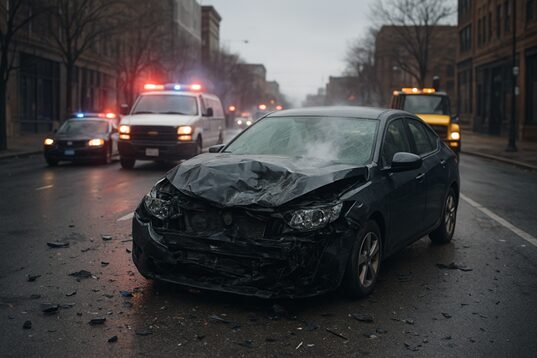
The sound of a siren typically prompts drivers to pull to the side of the road, clearing a path for help to arrive. We associate these vehicles with safety and rescue. However, collisions involving ambulances happen more frequently than many people realize. According to data from the National Highway Traffic Safety Administration (NHTSA), an average of 6,500 accidents involving ambulances occur each year in the United States. These incidents result in thousands of injuries and, tragically, a number of fatalities. The very vehicle meant to save lives can sometimes become the cause of a serious crash.
When an emergency vehicle like an ambulance is involved in a collision, the legal situation becomes more complex than a typical car accident. State traffic laws grant ambulance drivers special privileges when they are responding to an emergency. They can often exceed the speed limit, proceed through red lights, and disregard certain traffic regulations. However, these privileges are not a free pass to drive recklessly. Nearly every state has laws that require an emergency vehicle operator to drive with “due regard for the safety of all persons.” This means the driver must still act responsibly to avoid causing harm, creating a complicated legal standard that is often the central point of dispute in these cases.
Understanding your rights and the correct procedures to follow after being hit by an ambulance is crucial for protecting your health and financial future. The process is different from a standard car-on-car collision, especially since you may be filing a claim against a government body. This involves specific rules, short deadlines, and legal protections for the government agency, known as sovereign immunity. Knowing what to do in the first few minutes, hours, and days can significantly impact the outcome of your claim.
Determining Fault: Is the Ambulance Driver Always Right?
A common misconception is that an emergency vehicle is never at fault for a collision. While they are given significant leeway on the road, ambulance drivers can be held liable if their actions are deemed negligent or reckless. The determination of fault hinges on a careful analysis of the circumstances, the driver’s actions, and specific state laws.
The “Emergency Vehicle Doctrine” Explained
The legal framework that allows ambulances to bypass normal traffic laws is often called the “Emergency Vehicle Doctrine” or a similar statutory privilege. For these privileges to apply, two primary conditions must usually be met:
- Responding to a Genuine Emergency: The ambulance must be on an actual emergency call. This could mean traveling to the scene of an accident, transporting a critically ill patient to a hospital, or responding to a 911 dispatch. A vehicle returning to the station, transporting a stable patient for a routine transfer, or on a non-urgent task does not typically qualify for these protections.
- Using Audible and Visual Signals: The driver must have the ambulance’s emergency lights (visual signals) and siren (audible signal) activated. The purpose of these signals is to warn other drivers and pedestrians of the approaching hazard so they can yield the right-of-way. If a driver fails to use both, they may forfeit their special driving privileges.
If these conditions are met, the ambulance driver has the right-of-way. Other drivers have a legal duty to see and hear the approaching vehicle and pull over to a safe position to let it pass.
When the Ambulance Driver Can Be Found At Fault
Even with lights and sirens on, an ambulance driver is not immune from liability. The requirement to operate with “due regard for the safety of others” means they must not drive recklessly. An ambulance driver could be found partially or fully at fault in several situations:
- Reckless Driving: If the driver speeds through a crowded intersection without slowing down to ensure it is clear, they could be held liable. Forcing their way through traffic without giving other drivers a reasonable chance to yield is another example of failing to exercise due regard.
- Non-Emergency Operation: If the ambulance was not on an emergency call, the driver is treated like any other motorist. They must obey all traffic laws, including speed limits and traffic signals. A collision during a non-emergency run is typically evaluated just like any other car accident.
- Failure to Use Signals: If an ambulance driver is responding to an emergency but fails to activate their lights and siren, they generally cannot claim emergency vehicle privileges. Another driver cannot be expected to yield to a hazard they cannot see or hear.
- Driver Error or Impairment: Like any driver, an ambulance operator can make a mistake. If the collision was caused by distraction (e.g., using a phone), fatigue, or driving under the influence of alcohol or drugs, the driver and their employer would be liable.
The Role of the Civilian Driver
The other driver’s actions are also scrutinized. Every driver has a responsibility to be aware of their surroundings. If an ambulance with its lights and siren on is approaching, you have a legal duty to yield. If you failed to do so because you were distracted, listening to loud music, or simply didn’t look, you could be found partially at fault. This is based on the legal principle of comparative negligence, which many states use. Under this rule, the amount of compensation you can receive is reduced by your percentage of fault. For example, if you are found to be 20% at fault, your final settlement would be reduced by 20%.
Immediate Steps to Take at the Scene of the Collision
What you do in the moments following a crash with an ambulance can have a major impact on your physical recovery and your ability to secure fair compensation. It is vital to stay as calm as possible and follow a clear set of steps to protect yourself.
Prioritize Safety and Medical Care
Your health is the top priority. First, check yourself and your passengers for injuries. If anyone is hurt, do not move them unless they are in immediate danger, such as from a fire. Call 911 right away. When you call, be sure to:
- State your location clearly.
- Report that you have been in a collision with an ambulance.
- Describe any known injuries.
- Request both police and medical assistance.
Even if you believe your injuries are minor, you should still be evaluated by a medical professional. Adrenaline can mask pain, and serious conditions like internal bleeding, concussions, or soft tissue injuries may not be immediately apparent. Getting a medical check-up creates an official record of your injuries, which is essential for any future insurance claim or legal action.
Document Everything Meticulously
Evidence from the scene is incredibly valuable, as it can disappear quickly. If you are physically able, use your smartphone to document as much as possible.
- Photos and Videos: Take wide shots of the entire scene from multiple angles. Then, take close-up photos of the damage to your vehicle and the ambulance. Capture the license plates of both vehicles, the ambulance’s unit number, and any identifying marks of the ambulance service. Also, photograph the intersection, traffic signals, stop signs, weather conditions, and any skid marks on the road. A short video can help capture the overall context.
- Information Exchange: Get the name and badge number of the ambulance driver and any other crew members. Ask for the name of the ambulance service they work for (e.g., City of Atlanta Fire-Rescue, American Medical Response). You should also provide your own driver’s license and insurance information.
- Witnesses: If anyone saw the crash, ask for their name and phone number. Independent witness testimony can be powerful evidence, especially if the ambulance driver’s account differs from yours. Witnesses can confirm key details, such as whether the siren was on or which vehicle had the right-of-way.
The Importance of the Police Report
A police report is one of the most critical documents in any vehicle collision case. When the police arrive, cooperate fully and provide a clear, factual account of what happened. Avoid admitting fault or speculating about the cause of the crash. Stick to the facts as you remember them. The officer will typically:
- Interview both drivers and any witnesses.
- Inspect the vehicles and the scene.
- Note whether the ambulance appeared to be in emergency mode.
- Draw a diagram of the accident scene.
- Provide a preliminary assessment of what happened.
Before you leave the scene, make sure you get the police report number, the name of the investigating officer, and the police department’s contact information. You will need this to obtain a copy of the final report later.
The Unique Challenge: Filing a Claim Against a Government Entity
Unlike most car accidents where you deal with a private citizen’s insurance company, a collision with an ambulance often means you are up against a government agency. Most ambulance services are operated by cities, counties, or special districts. This brings a set of laws known as sovereign immunity into play, which creates a different and more difficult claims process.
Understanding Sovereign Immunity
Sovereign immunity is a centuries-old legal principle that originally meant the government (“the sovereign”) could not be sued without its consent. While modern laws have changed this, the principle still provides government entities with significant protections. Most states have passed a Tort Claims Act (or a similar statute) that allows citizens to sue the government for negligence, but only if they follow a very specific and strict set of rules.
These acts waive immunity for certain types of claims, like those arising from the negligent operation of a government vehicle. However, they also impose strict procedural requirements that do not exist in claims against private individuals or companies. Making a mistake in this process can result in your claim being permanently denied.
The “Notice of Claim” Requirement
The most important and time-sensitive requirement under a Tort Claims Act is the Notice of Claim. This is a formal written document that you must send to the correct government agency to inform them of your intent to seek damages. This notice must be filed very quickly after the incident.
- Strict Deadlines: The deadline for filing a Notice of Claim is much shorter than the standard statute of limitations for a personal injury lawsuit. Depending on the state and the specific government entity, this deadline can be as short as 30, 60, 90, or 180 days from the date of the collision. If you miss this deadline, you lose your right to sue, no matter how strong your case is.
- Specific Information: The notice must contain precise information, including your name and address, the date and location of the incident, a description of what happened, the nature of your injuries, and the amount of damages you are claiming.
- Proper Delivery: The notice must be delivered to the correct person or department within the government agency. Sending it to the wrong office can invalidate your claim.
Because of these strict requirements, it is highly recommended that you seek legal assistance to prepare and file your Notice of Claim.
Identifying the Responsible Party
Determining who to file the claim against is a critical first step. Ambulances can be operated by a variety of organizations:
- Municipal Services: City fire departments or county emergency medical services (EMS) are common operators.
- Private Companies: Hospitals or private companies (like AMR or Falck) are often contracted by cities to provide ambulance services. If a private company was involved, your claim might proceed more like a standard personal injury case, but it’s important to confirm.
- Volunteer Squads: In some rural areas, volunteer ambulance corps provide emergency services. These may have a different legal status.
The police report should identify the owner and operator of the ambulance. This information is essential for determining whether you need to file a Notice of Claim and which agency should receive it.
Dealing with Insurance Companies After an Ambulance Crash
Once you have addressed your immediate medical needs and documented the scene, you will need to start the insurance claims process. This involves communicating with your own insurer as well as the claims administrator for the ambulance service.
Reporting the Incident to Your Own Insurer
You should notify your own auto insurance company about the collision as soon as possible. Your policy likely requires you to report any accident in a timely manner. Your own coverage may be ableto help with immediate expenses, regardless of who was at fault.
- Personal Injury Protection (PIP) or Medical Payments (MedPay): If you have this coverage, it can pay for your initial medical bills and a portion of your lost wages. This allows you to get the treatment you need without waiting for a settlement from the other party.
- Collision Coverage: If you have collision coverage, you can use it to get your car repaired. Your insurance company will then seek reimbursement from the at-fault party’s insurer through a process called subrogation.
When you speak to your own insurer, provide the facts of the accident. They are on your side in the sense that they will want to recover any money they pay out from the responsible party.
Communicating with the Ambulance’s Insurer or Claims Administrator
Shortly after the crash, you will likely be contacted by an insurance adjuster or a claims administrator representing the ambulance service or the government entity that employs them. You should be extremely cautious in these conversations.
The adjuster’s job is to protect their client’s financial interests, which means minimizing the amount of money they pay you. They may ask you to provide a recorded statement about the accident. It is strongly advised that you do not give a recorded statement without first consulting with a personal injury attorney. Adjusters are trained to ask questions in a way that can get you to unintentionally say something that hurts your claim. For example, they might ask, “How are you feeling?” and if you say “I’m okay,” they can use that to argue your injuries are not serious.
Politely decline to give a statement and tell them your attorney will be in contact. Provide only your basic contact information and the details of your legal representation.
What to Expect from the Claims Process
Filing a claim against a government entity is often a slower and more formal process than dealing with a private insurance company. Be prepared for a lengthy investigation. The government agency will review the police report, interview the ambulance crew, check the vehicle’s maintenance records, and analyze any data from the ambulance’s onboard computer.
They may deny your claim initially, even if the evidence seems clear. This can be a tactic to see if you are serious about pursuing it. If your claim is denied after you have filed a Notice of Claim, your next step is to file a formal lawsuit.
Calculating Your Damages and What You Can Be Compensated For
If the ambulance driver is found to be at fault for the collision, you are entitled to compensation for the losses you have suffered. These losses, known as “damages,” are typically broken down into two categories: economic and non-economic.
Economic Damages: The Tangible Costs
Economic damages are the direct financial losses that can be calculated and proven with receipts, bills, and pay stubs. These include:
- Medical Expenses: This covers all costs related to your medical treatment, both past and future. It includes emergency room visits, hospital stays, surgeries, doctor’s appointments, physical therapy, prescription medications, and any necessary medical equipment.
- Lost Wages: If your injuries prevent you from working, you can be compensated for the income you have lost.
- Loss of Earning Capacity: If your injuries are permanent and affect your ability to earn a living in the future, you can claim damages for this long-term financial loss.
- Property Damage: This is the cost to repair your vehicle. If your car is declared a total loss, it is the fair market value of the vehicle right before the crash.
Non-Economic Damages: The Intangible Losses
Non-economic damages compensate you for the non-financial ways the accident has affected your life. These losses are more subjective but are just as real. They include:
- Pain and Suffering: This compensates you for the physical pain, discomfort, and emotional distress you have experienced because of your injuries.
- Emotional Anguish: This can include compensation for conditions like anxiety, depression, fear, and post-traumatic stress disorder (PTSD) that result from the traumatic event.
- Loss of Enjoyment of Life: If your injuries prevent you from participating in hobbies, activities, or family life that you previously enjoyed, you can be compensated for this loss.
The Role of Medical Records and Expert Testimony
To prove your damages, you will need strong evidence. Your medical records are the foundation for proving your injuries and the cost of your treatment. To establish future medical needs or a loss of earning capacity, your attorney may hire expert witnesses. A medical expert can testify about the long-term prognosis of your injuries, while a vocational expert can explain how your injuries will impact your ability to work and earn money in the future.
Why You Need a Personal Injury Attorney for This Type of Case
While you can technically handle any personal injury claim on your own, a case involving an ambulance and a government entity is one where legal representation is practically essential. The legal complexities and procedural hurdles are significant, and a single mistake can be fatal to your claim.
Expertise in Government Liability and Tort Claims Acts
An experienced Atlanta personal injury attorney who has handled cases against government entities will understand the specific laws and procedures in your state. They will know the exact deadline for filing your Notice of Claim, what information it must contain, and where it needs to be sent. This knowledge is critical to preserving your right to seek compensation.
Leveling the Playing Field
Government agencies have teams of lawyers and claims administrators whose job is to defend against claims and pay out as little as possible. As an individual, you are at a severe disadvantage when going up against these resources. Having your own attorney ensures that your rights are protected and that you have a skilled advocate fighting on your behalf.
Investigation and Evidence Gathering
A personal injury law firm has the resources to conduct a thorough investigation into the crash. An attorney can:
- Hire an accident reconstruction expert to analyze the physical evidence and determine how the crash occurred.
- Subpoena the ambulance’s maintenance records and the driver’s employment file.
- Obtain data from the ambulance’s “black box” recorder, which may show its speed and whether the lights and siren were active.
- Depose the ambulance driver and other witnesses under oath.
This evidence can be crucial for proving that the ambulance driver was negligent.
Maximizing Your Compensation
Attorneys are skilled negotiators who know how to value a claim properly. They will calculate all of your economic and non-economic damages to ensure that any settlement offer is fair. If the government agency refuses to offer a reasonable settlement, your attorney will be prepared to take your case to court and fight for the compensation you deserve.
Conclusion
A collision with an ambulance is a jarring and complicated event. The path to recovery, both physically and financially, is filled with unique challenges that are not present in a standard car accident. The special legal status of emergency vehicles, combined with the procedural complexities of filing a claim against a government entity, makes it a difficult situation for anyone to handle alone. The most important things to remember are to prioritize your health, document everything at the scene, and understand the critical importance of the Notice of Claim deadline.
The steps you take immediately following the incident can shape the outcome of your case. Proving fault requires a careful examination of whether the ambulance was on a true emergency call and whether the driver was operating with due regard for the safety of others. Because of the strict rules and short timelines associated with government claims, time is of the essence. Protecting your rights requires prompt and decisive action.
If you or someone you know has been involved in a crash with an ambulance, do not delay. The clock on your potential claim is already ticking. Your best course of action is to contact a personal injury attorney with specific experience in handling cases against government entities. A consultation can help you understand your legal options, ensure all deadlines are met, and provide you with the expert guidance needed to secure the compensation you are entitled to. Contact us today for free case evaluation.