
TL;DR: To report a car accident, contact your insurance company’s dedicated claims department as soon as possible through their 24/7 hotline, mobile app, or online portal. Provide your policy number, the date, time, and location of the incident, and the information you collected from the other driver. Describe the events factually and concisely, without admitting fault or speculating on the cause. Having a police report number and photos of the scene will significantly support your claim and help the process move forward efficiently.
Key Highlights
- Contact Your Insurer Promptly: Use the dedicated claims phone number or your insurer’s mobile app to start the process.
- Gather Essential Information: Before you call, have your policy number, accident details (date, time, location), and the other driver’s contact and insurance information ready.
- Provide a Factual Account: Describe what happened from your perspective. State only the facts and avoid emotional language, apologies, or admissions of guilt.
- Document the Scene: Use your smartphone to take pictures of vehicle damage, the surrounding area, traffic signals, and any visible injuries.
- Obtain the Police Report: Get the responding officer’s name and the official police report number, as this is a critical document for your claim.
- Understand Your Role: Your responsibility is to report the incident truthfully and cooperate with your claims adjuster throughout their investigation.
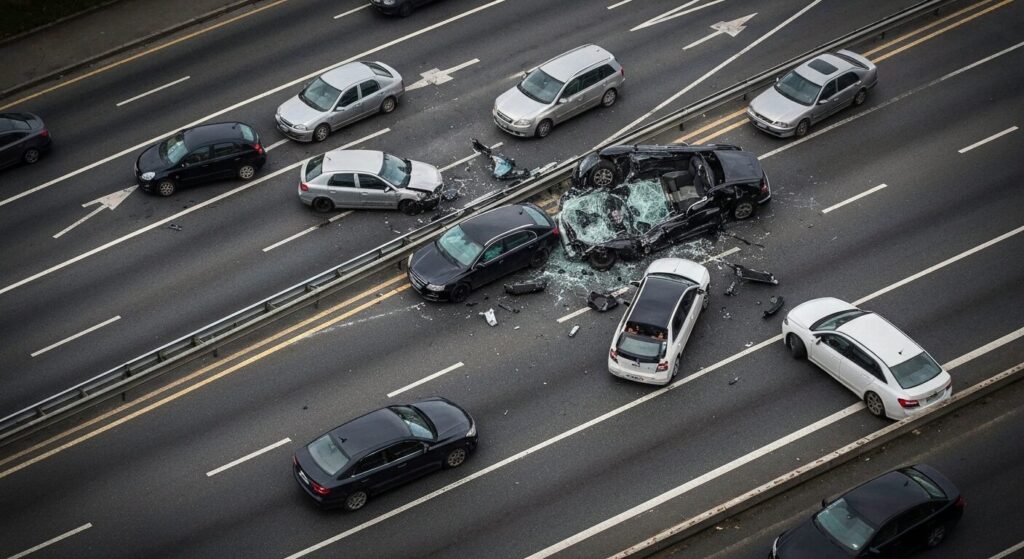
Each year, millions of drivers across the United States are involved in motor vehicle collisions. The National Highway Traffic Safety Administration (NHTSA) records over 5 million police-reported crashes annually, a figure that doesn’t even include the countless minor incidents handled privately. These events, ranging from small parking lot bumps to serious highway collisions, trigger a necessary and often unfamiliar process: filing an insurance claim. This isn’t merely a suggestion; it’s a fundamental part of your auto insurance agreement.
Your auto insurance policy is a legal contract. Within its terms, you will find a “notice of loss” provision and a “duty to cooperate” clause. These sections legally obligate you to inform your insurer about any incident that could result in a claim in a timely manner. Failing to do so can, in some cases, give the insurer grounds to deny coverage. This reporting requirement exists to allow the company to investigate the circumstances promptly, assess liability, and protect both you and its own financial interests from potential fraud or inflated claims.
The initial report you make sets the foundation for your entire claim. The information you provide, the way you describe the event, and the documentation you have prepared all directly influence how smoothly and fairly your claim is handled. A clear, factual, and prompt report empowers your claims adjuster to work efficiently on your behalf. This guide provides a detailed breakdown of the steps to take, the language to use, and the common pitfalls to avoid, ensuring you can manage this critical task with confidence and clarity.
The First 24 Hours: Immediate Steps Before You Report
What you do in the minutes and hours directly following a car crash is just as important as the report itself. The information and evidence you gather at the scene form the backbone of your insurance claim. A calm and methodical approach here will make the reporting process much simpler and more effective.
Ensure Safety and Call for Help
Your first priority is the well-being of everyone involved. Before you think about insurance, assess the situation for immediate dangers.
- Check for Injuries: Check on yourself, your passengers, and the occupants of the other vehicle(s). If anyone is hurt, call 911 immediately and report the injuries. Do not attempt to move someone who may have a serious neck or back injury unless they are in immediate danger, such as from a fire.
- Secure the Scene: If the accident is minor and the vehicles are drivable, move them to the shoulder or a safe location out of the flow of traffic. This prevents further collisions. Turn on your hazard lights to alert other drivers. If the vehicles cannot be moved, get yourself and any passengers to a safe spot away from the road.
- Contact Law Enforcement: Even for minor accidents, calling the police is a wise decision. A police officer will create an official accident report, which is an impartial, third-party account of the incident. This report contains crucial details, including a diagram of the scene, witness statements, and the officer’s initial assessment. Your insurance adjuster will rely heavily on this document.
The Art of Information Exchange
Once the scene is safe and help is on the way, you need to exchange information with the other driver(s). Do not rely on a verbal promise to “settle things later.” Get everything in writing or take pictures of the relevant documents.
Essential Information to Collect:
- Full Name and Contact Information: Get the other driver’s full name, address, and phone number.
- Insurance Details: Ask to see their insurance card and take a picture of it. Write down the insurance company’s name and the policy number.
- Driver’s License: Note their driver’s license number and the state of issue.
- Vehicle Information: Record the make, model, color, and license plate number of their vehicle.
- Witnesses: If there were any bystanders who saw the crash, politely ask for their names and phone numbers. Their statements can be invaluable if there is a dispute about what happened.
Be polite but firm during this exchange. Avoid getting into an argument about who was at fault. Your only job at this stage is to gather facts.
Document Everything: Your Phone is Your Best Tool
Photographic evidence is incredibly powerful. It provides a visual record that can’t be easily disputed. Use your smartphone to capture a comprehensive picture of the scene before the vehicles are moved (if it is safe to do so).
Key Photos to Take:
- Damage to All Vehicles: Take wide shots showing the overall damage and close-up shots of specific impact points on every car involved.
- The Entire Scene: Step back and take photos of the entire accident scene from multiple angles. Capture the position of the cars relative to each other and to the road.
- Contextual Clues: Photograph any relevant traffic signs (stop signs, speed limit signs), traffic lights, skid marks on the pavement, and road conditions (e.g., wet pavement, potholes).
- Weather and Time of Day: The photos will naturally capture this, which can be relevant to the conditions of the crash.
- Visible Injuries: If you or your passengers have any visible cuts, bruises, or scrapes, photograph them.
In addition to photos, consider using your phone’s voice recorder to make a verbal note to yourself about how the accident happened. Describe the sequence of events while it is still fresh in your mind. This can help you provide a consistent and accurate account later.
Speaking with Law Enforcement
When the police arrive, be prepared to give a clear and concise statement. Cooperate fully, but stick to the facts. Do not guess, speculate, or admit fault. Simply state what you saw and what you did. For example, say “I was stopped at the red light when my vehicle was struck from behind,” not “He wasn’t paying attention and slammed into me.”
Before the officer leaves, make sure to ask for two key pieces of information: their name and badge number, and the police report number. You will need this report number when you file your claim.
How to Report a Car Accident to Your Insurance Company
With your information gathered, it’s time to officially report the incident. Most insurance companies offer several ways to start a claim, making the process accessible and convenient. Acting quickly is key, as most policies require you to report an accident “promptly” or “as soon as reasonably possible.”
Choosing Your Reporting Method
You have several options for filing your First Notice of Loss (FNOL), which is the industry term for the initial report that officially opens your claim.
- 24/7 Claims Hotline (Most Common): This is the traditional and often most direct method. Insurers have dedicated phone lines for claims that are separate from their customer service or sales departments. A representative will walk you through a series of questions to capture all the necessary details.
- Mobile App: Nearly every major insurer has a smartphone app that includes a claims-filing feature. This is often the most efficient method, as it allows you to upload photos and documents directly from your phone right at the scene. The app will guide you through the required information step by step.
- Online Portal: Similar to the mobile app, you can log in to your account on the insurer’s website to file a claim. This is a good option if you prefer to type out the details and review them before submitting.
- Your Insurance Agent: You can also call your local insurance agent. While your agent can provide guidance and help you start the process, they will ultimately transfer the information to the company’s claims department. The claim will be handled by a professional claims adjuster, not your agent. It is often faster to contact the claims department directly.
What Information You’ll Need on Hand When Reporting an Accident to an Insurance Company
To make the reporting process as smooth as possible, have all your collected information organized and ready before you make contact. This will prevent you from having to search for details while on the phone or filling out a form.
Your Reporting Checklist:
- Your Policy Number: This is the first thing the representative will ask for. It’s on your insurance card and policy documents.
- Your Personal Information: Your full name, address, and phone number.
- Accident Details:
- Date and time of the crash.
- Specific location (e.g., “the intersection of Main Street and Oak Avenue” or “mile marker 42 on I-85 North”).
- A brief, factual description of what happened.
- Other Party’s Information:
- The other driver’s name, address, phone number, and insurance company/policy number.
- A description of their vehicle (make, model, license plate).
- Police Report Number: If a report was filed, provide the number and the name of the law enforcement agency.
- Vehicle Damage: A general description of the damage to your car and where it is located.
- Injuries: A statement about any injuries to yourself or your passengers.
The First Notice of Loss (FNOL)
Submitting this information creates the FNOL. This is the official starting point of your claim. Once the FNOL is received, the insurance company will assign a claim number and a claims adjuster to your case. The adjuster is the person who will investigate the incident, determine liability, and manage the claim through to its conclusion. You should receive your claim number within a day or two, which you will use as a reference for all future communications.
What to Say and What to Avoid When Reporting Your Accident to an Insurance Company
The words you choose when reporting your accident matter. Your initial statement becomes a permanent part of your claim file. Clear, factual, and careful communication will protect your interests, while emotional or speculative language can create complications.
Stick to the Facts, Not Feelings
Your goal is to provide an objective, chronological account of the event. Avoid dramatic language, opinions, or accusations. The adjuster’s job is to determine fault based on evidence, not on your interpretation.
- Instead of: “This maniac came speeding out of nowhere and T-boned me because he was probably texting!”
- Say this: “I was proceeding through the intersection with a green light when a blue sedan, traveling east on Pine Street, entered the intersection and struck the passenger side of my vehicle.”
The second statement is factual, neutral, and provides the necessary information without speculation. Let the police report, photos, and witness statements fill in the rest of the story.
The Danger of Admitting Fault
It is human nature to be apologetic, especially in a stressful situation. However, phrases like “I’m so sorry” or “This was all my fault” can be interpreted as an admission of legal liability. Even if you believe you were partially to blame, you may not be aware of all the contributing factors. Perhaps the other driver was speeding, or a traffic signal was malfunctioning.
Never admit fault to the other driver, to the police, or to your insurance company. Simply state the facts as you know them. It is the job of the insurance adjusters and, if necessary, legal experts to determine legal fault based on all the available evidence.
Discussing Injuries Carefully
How you talk about injuries is also critical. The effects of a car accident, such as whiplash or a concussion, may not be immediately apparent. Adrenaline can mask pain at the scene.
- Avoid saying: “I’m fine” or “I’m not hurt.” If you later discover an injury, this statement can be used to question the validity of your personal injury claim.
- It’s better to say: “I’m not sure if I’m injured yet. I plan to see a doctor to get checked out.”
If you are hurt, state it clearly. For example, “My neck and back are sore, and I am seeking medical attention.” This is a factual statement that documents your condition without exaggeration. Always follow through and get a medical evaluation if you feel any pain or discomfort.
Recorded Statements: Should You Give One?
Soon after you file a claim, an adjuster from your insurance company (and possibly the other driver’s insurer) may ask you to provide a recorded statement.
- For Your Own Insurance Company: Your policy’s “duty to cooperate” clause generally requires you to provide a recorded statement. Before you do, take time to gather your thoughts. Review your notes and the photos from the scene. During the statement, answer questions honestly and factually. If you don’t know the answer to a question, it is perfectly acceptable to say, “I don’t know” or “I don’t recall.” Do not guess.
- For the Other Driver’s Insurance Company: You are under no legal obligation to provide a recorded statement to the other party’s insurer. Their adjuster’s goal is to find information that could minimize their company’s payout. It is often wise to politely decline their request until you have completed your medical treatment or consulted with a personal injury attorney, especially if you were injured in the crash. You can simply say, “I am not prepared to give a statement at this time.”
Understanding the Role of the Claims Adjuster
Once your claim is filed, the claims adjuster becomes your primary point of contact. Understanding their role and what they do is essential for a productive relationship and a smooth claims process. Their job is complex, involving investigation, evaluation, and negotiation.
Who is the Claims Adjuster?
A claims adjuster (sometimes called a claims specialist or representative) is a professional employed by the insurance company to investigate insurance claims. Their primary responsibility is to determine the extent of the insurer’s liability for the loss reported in a claim.
You will likely interact with two adjusters:
- Your Adjuster: This person works for your insurance company. Their role is to investigate the claim on your behalf, explain your coverage (like collision or medical payments), and, if you are at fault, handle the claim being made by the other driver.
- The Other Party’s Adjuster (Third-Party Adjuster): This person works for the other driver’s insurer. If the other driver was at fault, this is the adjuster who will ultimately be responsible for paying for your damages. Their loyalty is to their employer, not to you.
The Investigation Process
After you file the FNOL, the adjuster begins a thorough investigation to piece together what happened and who is legally responsible. This process typically includes:
- Reviewing Your Report: They start with the information you provided in your initial report.
- Contacting All Parties: They will speak with you, the other driver, and any passengers or witnesses.
- Examining the Police Report: This is a key piece of evidence that provides an objective account of the incident.
- Analyzing Physical Evidence: They will review photos of the scene, vehicle damage, and any other documentation you submitted.
- Inspecting Vehicle Damage: The adjuster will arrange for an inspection of your vehicle to assess the extent of the damage and estimate the cost of repairs. This may be done by a field appraiser, at a partner body shop, or through a photo-based estimate system.
- Reviewing Medical Records: If an injury is claimed, the adjuster will request medical records and bills to verify the injury and its connection to the accident.
Cooperating with Your Adjuster
Your “duty to cooperate” means you must be responsive and provide the information your adjuster needs to handle your claim. Good communication can significantly speed up the process.
- Be Responsive: Return their calls and emails in a timely manner.
- Provide Documents Promptly: If they ask for a copy of the repair estimate or a medical bill, send it as soon as you can.
- Keep a Communication Log: Take notes of every conversation you have with the adjuster, including the date, time, and what was discussed. This creates a record and helps you stay organized.
- Be Patient but Persistent: The claims process can take time. It’s okay to follow up politely if you haven’t heard from your adjuster in a week or two, but understand that they are often managing many cases at once.
Reporting Different Types of Accidents to Your Insurance Company
Not all car accidents are straightforward collisions between two insured drivers. Certain situations require a slightly different approach to reporting.
Hit-and-Run Incidents
Discovering your car has been damaged by an unknown driver is frustrating. The reporting process is critical for accessing your coverage.
- Call the Police Immediately: A police report is essential for a hit-and-run claim. Without it, your insurer may be skeptical of the claim. Tell the police exactly where and when you believe the incident occurred.
- Look for Witnesses or Cameras: Check nearby businesses for security cameras that may have captured the event. Ask anyone in the area if they saw what happened.
- Contact Your Insurer: Report the incident and provide the police report number. A hit-and-run is a situation where your own policy coverages will apply.
- Collision Coverage: This will cover the repairs to your vehicle, but you will have to pay your deductible.
- Uninsured Motorist Property Damage (UMPD): Some states offer this coverage, which can pay for your repairs, often with a lower deductible than collision.
Accidents in a Rental Car
A crash in a rental car involves multiple layers of potential insurance coverage.
- Report to the Rental Company: Your rental agreement requires you to report any accident to them immediately. They will have their own procedures to follow.
- Determine Primary Coverage: The insurance that pays for the damage depends on the choices you made when you rented the car. The order of coverage is typically:
- Rental Company’s Insurance (CDW/LDW): If you purchased the Collision Damage Waiver or Loss Damage Waiver, this is usually your primary coverage for damage to the rental vehicle.
- Your Personal Auto Policy: Most personal policies extend liability and often collision coverage to rental cars.
- Credit Card Benefits: Many premium credit cards offer secondary rental car insurance if you used that card to pay for the rental.
- Report to Your Own Insurer: It is always a good idea to report the accident to your own insurance company. They can help you understand your coverage and ensure you are protected, especially for liability.
Single-Vehicle Accidents (e.g., Hitting a Pole or Deer)
If you are the only one involved, you still need to report the accident if you intend to make a claim for the damage.
- Hitting an Inanimate Object (Pole, Guardrail): This is considered an at-fault accident and will be covered under your collision coverage. You will be responsible for your deductible, and the claim may impact your future premiums.
- Hitting an Animal (Deer, etc.): This is considered a no-fault incident and is covered under your comprehensive coverage. You will still pay your deductible, but this type of claim is less likely to raise your rates.
In either case, taking photos of the damage and the scene (e.g., the pole you hit or the location of the animal crossing) is helpful for your claim.
Minor Fender-Benders: To Report or Not to Report?
This is a common dilemma. You tap someone’s bumper in a parking lot, the damage looks minimal, and the other driver suggests handling it with cash to avoid involving insurance.
- The Risk of Not Reporting: While settling privately seems easier, it carries significant risks. The other driver could later claim the damage was worse than it appeared or claim they sustained an injury. Without an official report, it becomes your word against theirs. What looks like a $300 bumper scuff can easily become a $2,000 repair once the plastic bumper cover is removed and hidden damage is found.
- The Safe Approach: The safest course of action is always to report the accident to your insurer, even if you ultimately decide not to file a claim. This creates a record of the incident and protects you from future liability. You can tell your insurer you are reporting it for record-keeping purposes only at this time. This fulfills your contractual duty without necessarily starting a repair claim.
After the Report: What to Expect from the Claims Process
Filing the report is the first step. Understanding what comes next will help you manage your expectations and stay engaged in the process.
The Damage Assessment and Repair Estimate
Your insurer needs to determine the cost to repair your vehicle. They will do this in one of several ways:
- Field Appraiser: An adjuster may come to your home or workplace to inspect the vehicle and write an initial estimate.
- Drive-In Claims Center: Your insurer may have a facility where you can take your car for an on-site inspection.
- Partner Repair Shop: You may be asked to take your car to a pre-approved body shop in their network for an estimate. You are not required to use their network shops, but it can sometimes streamline the process.
- Photo-Based Estimates: Increasingly common, you can submit photos of the damage through the insurer’s app, and they will generate an estimate remotely.
Remember that the initial estimate may change. If a body shop discovers additional hidden damage once they begin repairs, they will file a “supplement” with the insurance company to get approval for the additional costs.
Understanding Your Deductible
A deductible is the amount of money you are responsible for paying out-of-pocket for a claim on your own policy.
- When it Applies: You pay your deductible for collision and comprehensive claims. For example, if you have a $500 deductible and the repairs cost $3,000, you pay the first $500, and your insurer pays the remaining $2,500.
- When it Doesn’t Apply: You do not pay a deductible for a liability claim. If another driver is at fault, their liability coverage should pay for 100% of your damages, and you will not owe a deductible. If the other driver was at fault and you use your own collision coverage to get your car fixed faster, your insurer will try to recover your deductible from the other driver’s company through a process called subrogation.
The Settlement and Payment
Once the investigation is complete, liability is determined, and damages are assessed, the insurance company will issue a settlement.
- For Vehicle Repairs: Payment is often made directly to the body shop.
- For a Total Loss: If the cost to repair your vehicle exceeds its value, the insurer will declare it a total loss. They will pay you the Actual Cash Value (ACV) of your car, which is the market value right before the crash occurred.
- For Injury Claims: This is a more complex process involving medical bills, lost wages, and pain and suffering. Settlements for injuries can take much longer to resolve.
Timeline Expectations
The time it takes to settle a claim varies widely.
- Simple Property Damage Claims: If fault is clear and the damage is straightforward, a claim can be resolved in a few weeks.
- Complex Claims: If there is a dispute over fault, or if there are serious injuries, a claim can take many months or even years to fully resolve.
Conclusion
Reporting a car accident is a critical responsibility that protects your financial well-being and fulfills your contractual obligations. The process begins at the scene, with careful documentation and a focus on safety. By gathering all necessary information, from the other driver’s details to photographic evidence, you build a strong foundation for your claim. When you contact your insurer, your commitment to providing a clear, factual, and unemotional account ensures the claims adjuster has the information they need to act on your behalf.
Remember the key principles: act promptly, document thoroughly, and communicate carefully. Avoid admitting fault, and be precise when discussing injuries. Understanding the roles of the claims adjuster and the steps that follow your initial report will empower you to remain an active participant in the process. While every accident is different, a methodical and informed approach remains the most effective strategy for achieving a fair and efficient resolution.
Dealing with a car accident claim can be a demanding process, but it is a manageable one. If you have been in an accident, do not hesitate. Use the information you have gathered and contact your insurance provider immediately to begin the claims process. For situations involving serious injuries or complex liability disputes, seeking advice from a qualified car accident lawyer can provide additional guidance and ensure your rights are fully protected. Your proactive steps are the most powerful tool you have. Contact us today for free case evaluation.