
TL;DR
In most rear-end collisions, the driver who hits the vehicle from behind is presumed at fault because all drivers have a legal duty to maintain a safe following distance and remain in control of their vehicle. However, this presumption isn’t absolute. The front driver can share or bear full responsibility if they suddenly reversed, had non-functioning brake lights, engaged in brake checking, or stopped without reasonable cause. Fault determination depends on specific circumstances, evidence from the scene, witness statements, and applicable traffic laws in your state.
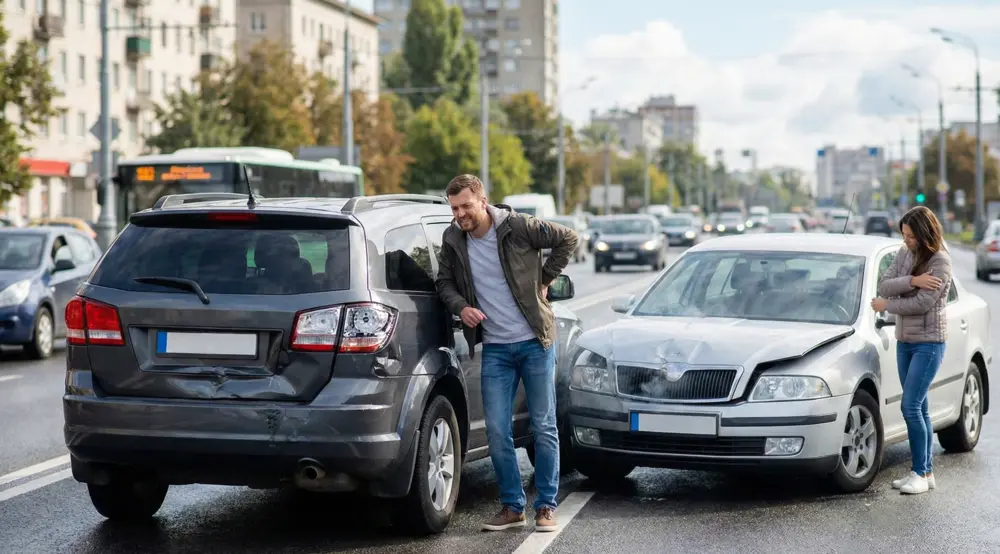
Rear-end collisions account for approximately 29% of all traffic accidents in the United States, resulting in nearly 2,000 deaths and 500,000 injuries annually according to the National Highway Traffic Safety Administration. These crashes occur every eight seconds on American roads, making them the most common type of vehicle collision. Despite their frequency, determining liability isn’t always straightforward, and the financial stakes are significant with average property damage claims exceeding $4,500 and injury claims often reaching six figures.
Most states follow a negligence-based system for traffic accidents, where the driver who breached their duty of care bears financial responsibility. The presumption that rear drivers are automatically liable stems from fundamental traffic laws requiring adequate following distance, constant vehicle control, and the ability to stop safely when traffic conditions change. However, modern accident reconstruction techniques, dashcam footage, and thorough investigations have revealed situations where this traditional assumption doesn’t hold true, making it essential to understand how fault is actually determined rather than assumed.
The Legal Presumption of Rear Driver Fault
When a vehicle strikes another from behind, traffic laws in all 50 states create a rebuttable presumption that the trailing driver acted negligently. This legal principle exists because drivers are required to maintain sufficient space between vehicles to account for sudden stops, changing road conditions, and unexpected hazards. The reasoning is simple: if you had adequate following distance and were paying proper attention, you should be able to stop before hitting the car ahead.
State traffic codes typically mandate following distances of at least two to three seconds under normal conditions, with greater distances required during adverse weather. California Vehicle Code Section 21703 states that drivers must not follow more closely than is “reasonable and prudent” given the speed, traffic, and road conditions. Similar statutes exist nationwide, and violating these provisions establishes a prima facie case of negligence when a rear-end collision occurs.
The Three-Second Rule and Its Legal Implications
The three-second rule serves as both a safety guideline and a legal standard. To apply it, watch when the vehicle ahead passes a fixed object, then count how long until you reach that same point. If it’s less than three seconds, you’re following too closely. This standard increases to four or five seconds in rain, fog, or heavy traffic. Insurance adjusters and courts frequently reference this rule when evaluating fault, and failure to maintain this distance significantly strengthens the presumption against the rear driver.
Burden of Proof in Rear-End Cases
Once a rear-end collision occurs, the burden shifts to the trailing driver to prove they weren’t negligent or that the front driver’s actions caused the crash. This reversed burden of proof makes rear-end cases particularly challenging for defendants. You’ll need concrete evidence such as video footage, witness testimony, or expert accident reconstruction to overcome the presumption. Without such evidence, insurance companies and courts will almost certainly assign fault to the rear driver based on the collision pattern alone.
How Insurance Companies Initially Assess These Claims
Insurance adjusters begin with the presumption that their insured rear driver is 100% at fault. They’ll examine the police report, photograph damage patterns, and interview both parties. The location and severity of damage tells a story: impact to the center rear bumper with corresponding front-end damage to the trailing vehicle strongly suggests the rear driver’s fault. Adjusters look for any evidence that might shift liability, but without compelling proof of the front driver’s negligence, they’ll typically accept fault and process the claim accordingly.
Situations Where the Front Driver May Be at Fault
While less common, several scenarios exist where the leading vehicle’s driver bears partial or complete responsibility for a rear-end collision. These exceptions to the general rule require clear evidence and often involve aggressive or illegal driving behavior by the front driver. Understanding these situations is critical if you’ve been blamed for a rear-end crash you believe wasn’t your fault.
Sudden and Unjustified Reversing
When a driver suddenly shifts into reverse without warning, they create an unavoidable hazard for vehicles behind them. This commonly occurs in parking lots, at intersections when drivers miss a turn, or in stop-and-go traffic. If the front vehicle’s reverse lights activate and the car moves backward into yours, the front driver is typically liable. Dashcam footage proving the reverse movement is invaluable in these cases, as is testimony from witnesses who saw the backup lights illuminate.
Brake Checking and Aggressive Driving
Brake checking occurs when a driver intentionally slams on their brakes to force a rear driver to react, often as retaliation for perceived tailgating or in road rage incidents. This deliberate action to cause a collision constitutes reckless driving and shifts liability to the front driver. However, proving brake checking requires evidence showing the front driver had no legitimate reason to brake suddenly. Video footage showing no obstacles ahead, witness statements describing aggressive behavior, or a pattern of brake applications can establish this defense.
Non-Functioning Brake Lights
Every vehicle must maintain working brake lights to warn following drivers of deceleration. When brake lights fail and a rear-end collision results, the front driver may share fault for failing to maintain their vehicle in safe operating condition. This defense works best when the rear driver can show they were maintaining proper following distance and would have stopped safely if properly warned. Photographs of the non-functioning lights taken immediately after the crash, along with testimony about visibility conditions, strengthen this argument.
Disabled Vehicles Without Proper Warning
Drivers whose vehicles become disabled have a legal duty to move to the shoulder when possible and activate hazard lights to warn approaching traffic. A vehicle that stops in a travel lane without warning, especially on high-speed roads or around curves, creates an unreasonable hazard. If you rear-end a disabled vehicle that failed to use hazards or move to safety when able, the front driver may bear partial responsibility. The key factors are whether the disabled driver had time to react, whether they activated warnings, and whether you had sufficient time and distance to stop once the hazard became visible.
Comparative and Contributory Negligence in Rear-End Crashes
Fault isn’t always an all-or-nothing determination. Most states apply comparative negligence principles that allow fault to be divided between multiple parties based on their respective contributions to the accident. Understanding how your state handles shared fault directly impacts your potential recovery and liability exposure.
Pure Comparative Negligence States
Thirteen states including California, Florida, and New York follow pure comparative negligence, which allows injured parties to recover damages even if they were 99% at fault. The recovery amount is simply reduced by the plaintiff’s percentage of fault. In a rear-end case, this means if you’re the rear driver found 80% at fault but the front driver contributed 20% through sudden braking without cause, you can still recover 20% of your damages from the front driver while being liable for 80% of theirs.
Modified Comparative Negligence States
The majority of states use modified comparative negligence with either a 50% or 51% bar rule. Under the 50% bar used in states like Colorado and Maine, you cannot recover damages if you’re 50% or more at fault. The 51% bar, used in states like Illinois and New Jersey, allows recovery if you’re exactly 50% at fault but bars recovery at 51% or higher. These thresholds make the precise allocation of fault critically important in rear-end cases where both drivers may have contributed to the collision.
Contributory Negligence States
Four states (Alabama, Maryland, North Carolina, and Virginia) plus the District of Columbia follow pure contributory negligence, the harshest rule for plaintiffs. Under this doctrine, if you contributed to the accident in any way, even 1%, you cannot recover any damages. For rear drivers in these jurisdictions, proving any fault by the front driver becomes essential to avoid complete liability. Conversely, front drivers in these states must defend against even minor allegations of fault to preserve their full recovery rights.
How Fault Percentages Are Determined
Fault allocation involves analyzing all evidence to assign percentage responsibility to each party. Insurance adjusters, mediators, or juries consider factors including following distance, speed, road conditions, visibility, distraction, traffic violations, and each driver’s opportunity to avoid the collision. In rear-end cases, the starting point is typically 100% rear driver fault, which then shifts based on proven negligent acts by the front driver. Expert testimony from accident reconstructionists often proves decisive in establishing these percentages.
Evidence That Determines Fault in Rear-End Collisions
The outcome of fault disputes hinges on the quality and quantity of evidence preserved and presented. In the immediate aftermath of a rear-end collision, the actions you take to document the scene can make the difference between being held liable or successfully defending against fault allegations.
Police Reports and Officer Determinations
The responding officer’s report carries substantial weight with insurance companies and courts. Officers document the collision location, vehicle positions, road conditions, witness statements, and their professional opinion about causation. While not legally binding, an officer’s fault determination based on physical evidence and traffic law violations creates a strong presumption. If the officer cites the rear driver for following too closely or the front driver for improper backing, that citation significantly influences the liability determination.
Photographic and Video Evidence
Photographs of vehicle damage, skid marks, road conditions, traffic control devices, and the overall scene provide objective evidence of how the collision occurred. Damage location and severity help reconstruct the impact: rear-end damage centered on the bumper suggests straightforward rear-ending, while corner damage might indicate a lane change or sideswipe component. Dashcam footage has become increasingly valuable, providing real-time proof of following distance, traffic conditions, and driver actions immediately before impact. Many cases that would otherwise default to rear driver fault have been successfully defended with video showing brake checking, sudden reversing, or other front driver negligence.
Witness Testimony
Independent witnesses who saw the collision provide crucial third-party perspectives free from the bias of involved drivers. Witnesses can confirm whether the rear driver was tailgating, whether the front driver brake checked or reversed, and what traffic conditions existed. Their statements carry particular weight when they corroborate physical evidence or video footage. In cases without video evidence, witness testimony may be the only way to overcome the presumption of rear driver fault.
Vehicle Data Recorders and Telematics
Modern vehicles contain event data recorders (EDRs) that capture information about speed, braking, acceleration, and other factors in the seconds before a collision. This data can prove whether a driver was speeding, failed to brake, or took evasive action. Telematics systems used by insurance companies for usage-based policies also record driving behavior including hard braking events. In disputed rear-end cases, this electronic evidence provides objective data about driver actions that human testimony cannot refute.
Accident Reconstruction Expert Analysis
Complex rear-end collisions often require accident reconstruction experts who analyze physical evidence, vehicle damage, road conditions, and driver statements to determine how the crash occurred. These experts calculate speeds, braking distances, reaction times, and sight lines to establish whether drivers had adequate opportunity to avoid the collision. Their testimony can overcome the presumption of rear driver fault by demonstrating that the front driver’s actions created an unavoidable hazard or that the rear driver was maintaining proper following distance when an unexpected event occurred.
Common Defenses for Rear Drivers Accused of Fault
If you’ve been blamed for a rear-end collision you believe wasn’t entirely your fault, several defenses may reduce or eliminate your liability. These defenses require evidence and often benefit from legal representation to present effectively to insurance companies or in court.
Sudden Emergency Doctrine
The sudden emergency doctrine provides a defense when an unexpected event outside the driver’s control creates a situation requiring immediate reaction. If the front vehicle suddenly swerved into your lane giving you no time to react, or if a pedestrian or animal darted into traffic causing the front driver to stop abruptly, you may not be liable for the resulting rear-end collision. This defense requires proving that the emergency was truly sudden and unexpected, that you didn’t create the emergency through your own negligence, and that your response was reasonable under the circumstances.
Mechanical Failure Defense
When a mechanical failure causes a rear-end collision despite proper vehicle maintenance, the driver may escape liability. Brake failure, throttle sticking, or steering malfunction can prevent a driver from avoiding a collision even when following at a safe distance. This defense requires documentation that the vehicle was properly maintained, that the failure was sudden and unforeseeable, and that the driver attempted to control the vehicle or mitigate the collision. Maintenance records, expert mechanical inspection, and testimony about the driver’s actions strengthen this defense.
Front Driver’s Traffic Violations
Establishing that the front driver violated traffic laws immediately before the collision shifts fault analysis. If the front driver made an illegal turn, ran a red light then stopped suddenly, or committed another violation that directly caused the collision, their negligence may equal or exceed the rear driver’s. The key is showing a direct causal link between the violation and the crash. A front driver who runs a red light then stops in the intersection creates a hazard that may absolve a rear driver who couldn’t reasonably anticipate the illegal stop.
Adequate Following Distance Evidence
Proving you maintained adequate following distance challenges the primary basis for rear driver fault. Dashcam footage showing a three-second or greater gap, witness testimony about spacing, or accident reconstruction showing sufficient distance given the speeds involved can establish this defense. When combined with evidence of the front driver’s negligent act, proof of adequate following distance creates a strong case that the collision resulted from the front driver’s actions rather than the rear driver’s tailgating.
The Claims Process After a Rear-End Collision
Understanding how insurance claims proceed after a rear-end collision helps you protect your interests and maximize your recovery or minimize your liability. The process involves multiple steps, each with strategic implications for fault determination and damage recovery.
Immediate Post-Accident Reporting
Most insurance policies require prompt accident reporting, typically within 24 to 72 hours. Contact your insurance company immediately to report the collision, even if you believe you weren’t at fault. Provide factual information about the collision location, time, vehicles involved, and basic circumstances without admitting fault or speculating about causation. Your insurance company has a duty to defend you against liability claims, but they can only do so if promptly notified. Delayed reporting can provide grounds for claim denial under policy terms.
The Insurance Investigation Phase
Both drivers’ insurance companies will investigate the collision to determine liability and damages. Adjusters will request your statement, review the police report, examine vehicle damage, interview witnesses, and gather all available evidence. Be cautious during recorded statements, as adjusters may ask leading questions designed to elicit admissions of fault. Stick to factual observations about what you saw, heard, and did without speculating about the other driver’s actions or accepting blame. Consider consulting a rear-end collision attorney before providing detailed statements, especially if fault is disputed or injuries are significant.
Property Damage Claims
Property damage claims typically resolve faster than injury claims because vehicle damage is easily quantifiable. If you’re the rear driver and clearly at fault, your liability insurance pays for the front vehicle’s repairs or replacement value if totaled. If fault is disputed, damage may not be paid until liability is established through negotiation or litigation. Document your vehicle damage thoroughly with photographs and obtain multiple repair estimates. If the other driver’s insurance denies your property damage claim based on disputed fault, you may need to file through your own collision coverage then let your insurer pursue subrogation against the at-fault party.
Injury Claims and Medical Documentation
Personal injury claims require medical documentation linking your injuries to the collision. Seek medical attention immediately after the accident, even for seemingly minor injuries, as delayed treatment creates gaps that insurance companies exploit to deny claims. Keep detailed records of all medical treatment, expenses, lost wages, and how injuries impact your daily life. In rear-end collisions, whiplash and soft tissue injuries are common but difficult to prove without consistent medical documentation. The at-fault driver’s bodily injury liability coverage pays for medical expenses, lost income, and pain and suffering, but only after liability is established.
Settlement Negotiations vs. Litigation
Most rear-end collision claims settle through negotiation without litigation. Insurance companies evaluate liability and damages, then make settlement offers that claimants can accept, reject, or counter. Settlement negotiations can take weeks to months depending on injury severity and liability disputes. If negotiations fail to produce acceptable settlement terms, filing a lawsuit becomes necessary. Litigation involves formal discovery, depositions, expert witnesses, and potentially trial, extending the resolution timeline to one to three years. However, filing suit often motivates insurance companies to make more reasonable settlement offers to avoid trial costs and verdict uncertainty.
Protecting Your Rights After a Rear-End Collision
Whether you’re the rear driver facing liability allegations or the front driver pursuing compensation, specific actions protect your legal and financial interests. Taking these steps immediately after a rear-end collision strengthens your position throughout the claims process.
Document Everything at the Scene
If safe to do so, photograph all vehicles from multiple angles showing damage, vehicle positions, skid marks, traffic controls, road conditions, and the surrounding area. Take photos of the other driver’s license, registration, and insurance card. Record the exact location, time, weather conditions, and traffic patterns. If witnesses are present, obtain their names and contact information. This documentation provides evidence that memories and verbal accounts cannot match weeks or months later when claims are disputed.
Seek Medical Attention Immediately
Even if you feel fine, see a doctor within 24 hours of the collision. Adrenaline and shock mask injury symptoms that emerge hours or days later. Medical records created immediately after the accident establish that your injuries resulted from the collision rather than subsequent events. Delayed medical treatment gives insurance companies ammunition to argue that your injuries weren’t serious or weren’t caused by the accident. Follow all treatment recommendations and attend all appointments to demonstrate the injury severity and your efforts to mitigate damages.
Avoid Admitting Fault or Apologizing
Natural human instinct is to apologize after a collision, but statements like “I’m sorry” or “I didn’t see you” can be interpreted as fault admissions that damage your claim. Limit your statements at the scene to factual information for the police report. Don’t discuss fault with the other driver, witnesses, or insurance adjusters until you’ve had time to review evidence and consult with an attorney if needed. What seems like a clear-cut case of your fault may involve contributing factors that only become apparent after thorough investigation.
Consult an Attorney for Disputed Fault or Serious Injuries
If fault is disputed, if you’ve suffered significant injuries, or if the insurance company denies your claim or makes an unreasonably low offer, consult a personal injury attorney. Most offer free consultations and work on contingency fees, meaning they only get paid if you recover compensation. Attorneys understand the evidence needed to prove or defend against fault, negotiate more effectively with insurance companies, and can file litigation when necessary. The difference between handling a disputed rear-end collision claim yourself versus with experienced legal representation often amounts to tens of thousands of dollars in additional recovery.
Understand Your Insurance Coverage
Review your own insurance policy to understand your coverage and obligations. Liability coverage pays for damage you cause to others. Collision coverage pays for your vehicle damage regardless of fault, subject to your deductible. Medical payments or personal injury protection covers your medical expenses regardless of fault. Uninsured/underinsured motorist coverage protects you if the at-fault driver lacks adequate insurance. Understanding these coverages helps you make strategic decisions about filing claims and protecting your interests when the other driver’s insurance disputes fault or offers inadequate compensation.
Conclusion
Rear-end collisions carry a strong presumption that the trailing driver is at fault based on fundamental traffic laws requiring safe following distances and vehicle control. This presumption stems from the principle that drivers who maintain adequate space and attention should be able to stop safely when traffic ahead slows or stops. However, this assumption isn’t absolute, and specific circumstances including brake checking, sudden reversing, non-functioning brake lights, and unjustified stops can shift partial or complete liability to the front driver. The fault determination process examines all available evidence including police reports, photographs, video footage, witness statements, and expert analysis to establish who breached their duty of care and caused the collision.
Understanding how fault is determined in rear-end collisions empowers you to protect your rights whether you’re facing liability allegations or pursuing compensation for your injuries and damages. Document the scene thoroughly, seek immediate medical attention, avoid admitting fault, and consult with an attorney when fault is disputed or injuries are significant. The actions you take in the hours and days following a rear-end collision directly impact the outcome of your insurance claim and any potential litigation.
Don’t assume that being the rear driver automatically makes you liable, and don’t assume that being the front driver guarantees compensation. Each case depends on its specific facts, and the quality of evidence you preserve determines whether you’ll successfully establish or defend against fault allegations. If you’ve been involved in a rear-end collision with disputed liability, contact an experienced personal injury attorney today to evaluate your case and protect your legal rights.