
TL;DR: If you are in a car accident in Georgia that was not your fault, your first priority is safety. Move to a safe location if possible, call 911 to report the collision and request medical assistance, and exchange contact and insurance information with the other driver without admitting fault. Document the scene extensively with photos and videos of vehicle damage, road conditions, and any injuries. Seek a medical evaluation immediately, even if you feel fine, as many injuries have delayed symptoms. Report the incident to your own insurance company and file a claim with the at-fault driver’s insurer. Be cautious when speaking with their insurance adjuster and avoid giving a recorded statement without legal advice. Keep all records related to the accident, including medical bills, repair estimates, and proof of lost wages, to build a strong case for compensation.
Key Highlights
- Prioritize Safety and Call 911: Move to a safe location and immediately report the accident to the police.
- Document Everything: Take photos, get witness information, and exchange driver and insurance details.
- Get the Police Report: An official report is a critical piece of evidence for establishing fault.
- Seek Medical Attention: Get checked by a doctor, even if you feel fine, to diagnose and document any injuries.
- Notify Your Insurer: Inform your own insurance company about the collision promptly.
- Be Cautious with the Other Insurer: Do not provide a recorded statement or accept a quick settlement from the at-fault driver’s insurance company without careful consideration.
- Keep Meticulous Records: Maintain a file for all medical records, repair bills, and communication related to the accident.
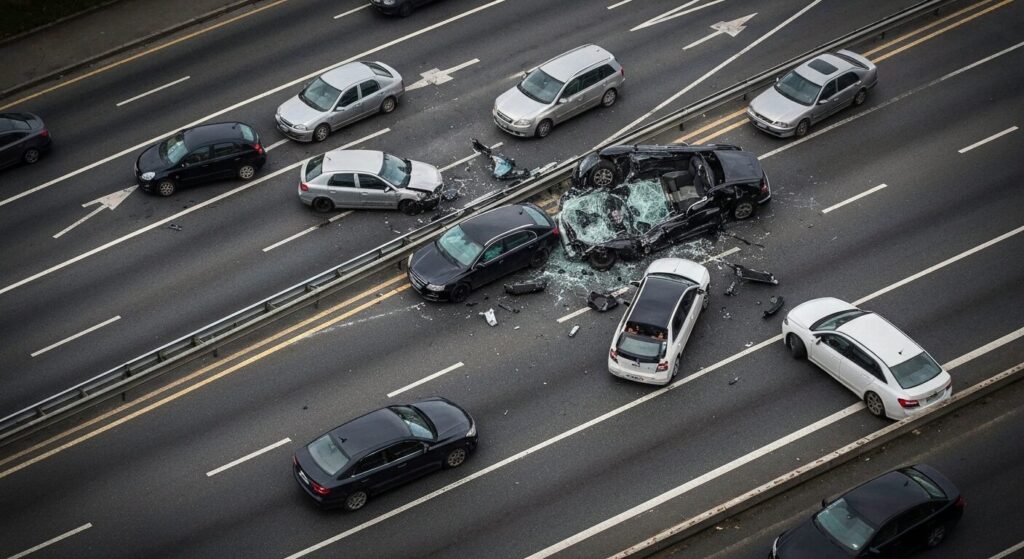
In Georgia, thousands of vehicle collisions occur every year, leaving many people with injuries and significant property damage. According to the Georgia Department of Transportation, there were over 330,000 total crashes in a recent year, resulting in more than 1,700 fatalities and tens of thousands of injuries. These figures highlight a daily reality on roads from Atlanta to Savannah. When a crash is caused by another driver’s negligence, the person who was hit is often left to deal with the physical, emotional, and financial consequences.
Understanding your rights and obligations is critical because Georgia operates under a “tort” or “at-fault” insurance system. This means the driver who caused the collision is legally responsible for the damages they inflict. Their liability insurance is the primary source of compensation for the victim’s medical expenses, lost income, and vehicle repairs. This system is governed by specific state laws, including the Official Code of Georgia Annotated (O.C.G.A.), which sets deadlines and rules for how fault is determined and how compensation is awarded.
1. Immediate Actions at the Scene of the Collision
What you do in the first few moments after a crash can have a significant impact on your safety and the outcome of your insurance claim. Panic and confusion are normal, but following a clear set of steps will help you stay in control.
Prioritize Safety First
Before anything else, assess the immediate danger. If your vehicle is in a lane of traffic and can be moved, carefully drive it to the shoulder or a nearby safe location. This reduces the risk of a secondary collision.
- Turn on your hazard lights to alert other drivers.
- If you have them, place emergency cones or flares behind your vehicle.
- Turn off your engine to prevent a potential fire, especially if you see leaking fluids.
- Check on yourself and your passengers for any injuries. Do not move anyone who complains of severe neck or back pain unless they are in immediate danger, such as from a fire.
Move to a Safe Location: If the vehicles are drivable and the accident is minor, Georgia law (O.C.G.A. § 40-6-275) requires you to move your vehicle to the shoulder or another safe area to avoid obstructing traffic. If the cars cannot be moved or there are serious injuries, leave them where they are.
Call 911 and Report the Incident
Always call 911, no matter how minor the accident appears. There are two critical reasons for this. First, it summons medical help for anyone who might be injured. Second, it brings law enforcement to the scene. A police officer will create an official accident report, which is an invaluable piece of evidence. This report will contain:
- The officer’s assessment of how the crash occurred.
- A diagram of the scene.
- Any citations issued to the at-fault driver.
- Statements from drivers and witnesses.
- Insurance information for all parties involved.
This official document is often the cornerstone of proving the other driver was at fault when you file your claim.
Exchange Information Correctly
While waiting for the police, calmly exchange essential information with the other driver. Do not rely on a verbal promise; write it down or take a picture of their documents with your phone. Collect the following:
- Full Name and Address: As it appears on their driver’s license.
- Phone Number and Email Address: For future contact.
- Driver’s License Number: A crucial identifier.
- Insurance Company and Policy Number: The most important detail for your claim.
- License Plate Number: Along with the make, model, and color of their vehicle.
What Not to Say
Your words at the scene can be used against you later. Even when the other driver is clearly at fault, avoid certain phrases:
- Do not apologize. Saying “I’m sorry” can be misinterpreted as an admission of guilt by an insurance adjuster, even if you are just being polite.
- Do not say “I’m fine” or “I’m not hurt.” Adrenaline can mask pain from serious injuries like whiplash or concussions. Symptoms may not appear for hours or even days. Simply state that you will be seeking a medical evaluation.
- Do not discuss the details of the crash or speculate on fault. Stick to the facts when speaking with the other driver and the police. Let the evidence and the police report speak for themselves.
2. Documenting the Scene: Your First Line of Evidence
In a personal injury or property damage claim, evidence is everything. The at-fault driver’s insurance company will look for any reason to dispute liability or minimize the value of your claim. The evidence you gather at the scene is your best tool to counter their efforts.
The Power of Photographic Evidence
Your smartphone is a powerful documentation tool. Take more photos than you think you need from various angles and distances. Capture the following:
- Damage to All Vehicles: Take close-up shots of the damage to your car and the other vehicle(s). Also, take wider shots showing the position of the cars relative to each other.
- The Entire Scene: Photograph the intersection, traffic signals, road signs, and any skid marks on the pavement. These images help reconstruct the event.
- Road and Weather Conditions: Was it raining? Was there a pothole or construction that contributed to the incident? Document it.
- Visible Injuries: If you have any cuts, bruises, or other visible injuries, photograph them immediately.
These photos create a visual record that is difficult for an insurance company to dispute. They can corroborate your version of events and prove the extent of the property damage.
Identifying and Speaking with Witnesses
Independent witnesses can provide an unbiased account of the collision. If anyone stopped to help or saw what happened, ask for their name and phone number. A statement from a third party who has no stake in the outcome can be extremely persuasive. The police officer will likely speak to them, but having their contact information allows your insurance company or attorney to follow up if needed.
Obtaining the Official Police Report
The police report is a key document. Before you leave the scene, ask the responding officer for their name, badge number, and the police report number. Also, ask where and when you can obtain a copy of the report. It typically takes a few days to become available. Once you have it, review it carefully for accuracy. If you find any factual errors, contact the police department to request a correction or an addendum. This report will be one of the first things the insurance adjuster asks for when evaluating your claim.
3. Seeking Medical Attention and Documenting Injuries
Your health is the top priority. Some injuries are not immediately apparent after a car crash. Seeking a prompt medical evaluation protects your well-being and creates an official record of any injuries you sustained.
Why You Must See a Doctor, Even If You Feel Fine
The force of a car collision can cause significant harm to the human body, even at low speeds. Adrenaline that floods your system during a stressful event can temporarily block pain signals. This is why many people walk away from a crash feeling fine, only to wake up the next day in severe pain.
- Delayed-Onset Injuries: Conditions like whiplash (a soft tissue neck injury), concussions, and herniated discs often have delayed symptoms.
- Internal Injuries: Internal bleeding or organ damage can be life-threatening and may not present immediate external signs.
Going to an urgent care clinic, your primary care physician, or the emergency room creates a medical record that links your injuries directly to the accident. Any delay in seeking treatment can be used by an insurance adjuster to argue that your injuries were not caused by the crash or were not serious.
Creating a Medical Record Trail
Documentation is just as important for your physical recovery as it is for your financial recovery.
- Follow All Medical Advice: Adhere strictly to your doctor’s treatment plan. This includes attending all physical therapy sessions, taking prescribed medications, and going to follow-up appointments.
- Keep All Paperwork: Save every bill, receipt, and report related to your medical care. This includes hospital bills, co-pays, prescription costs, and even mileage for driving to appointments.
- Maintain a Pain Journal: Keep a simple log of your symptoms. Note your pain levels, any physical limitations, and how the injuries are affecting your daily life (e.g., inability to work, sleep disturbances, difficulty with household chores). This journal can be powerful evidence of your pain and suffering.
Common Delayed-Onset Injuries After a Car Crash
Be aware of symptoms that may appear in the hours and days following the incident.
- Headaches or Dizziness: Could indicate a concussion or traumatic brain injury (TBI).
- Neck or Shoulder Stiffness: A classic sign of whiplash.
- Back Pain: May point to a sprain, herniated disc, or other spinal injury.
- Numbness or Tingling: Can be a symptom of nerve damage or a pinched nerve.
If you experience any of these symptoms, seek medical attention immediately.
4. Dealing with Insurance Companies: Your Insurer vs. Theirs
Once you have addressed your immediate safety and medical needs, you must begin the insurance claims process. You will be communicating with both your own insurance company and the at-fault driver’s insurer. These conversations require very different approaches.
Reporting the Accident to Your Own Insurance Company
Most insurance policies require you to report any accident promptly, even if you were not at fault. Failing to do so could jeopardize your coverage. When you call your insurer:
- Stick to the Facts: Provide the date, time, and location of the crash. Give them the other driver’s information and the police report number.
- Do Not Speculate: Avoid guessing about details you are unsure of. It is okay to say, “I don’t know.”
- Explain Your Injuries: Let them know you have sought or will be seeking medical attention.
Your insurance company can be a valuable ally. They can help you with initial steps, especially if you have collision coverage to get your car repaired faster while they seek reimbursement from the at-fault party’s insurer (a process called subrogation).
The Role of the Other Driver’s Insurance Adjuster
Shortly after the accident, you will likely receive a call from the at-fault driver’s insurance adjuster. It is critical to understand their role. Their job is to protect their company’s bottom line by paying out as little as possible. They are not on your side. They may seem friendly and helpful, but their questions are designed to find information that can be used to devalue your claim.
Why You Should Avoid Giving a Recorded Statement
The adjuster will almost certainly ask you to provide a recorded statement about the accident. You are not legally obligated to do this, and it is generally not in your best interest. Adjusters are trained to ask leading questions that can trick you into saying something that implies partial fault or suggests your injuries are not severe.
- What to Say Instead: Politely decline the request. You can say, “I am not comfortable giving a recorded statement at this time. I am still processing the event and focusing on my medical treatment.”
- Your Words Can Be Permanent: A recorded statement becomes a permanent part of your claim file. Any inconsistencies between that statement and later information can be used to question your credibility.
Understanding Uninsured/Underinsured Motorist (UIM) Coverage
What happens if the at-fault driver has no insurance or not enough to cover your damages? This is where Uninsured/Underinsured Motorist (UIM) coverage on your own policy becomes essential.
- Uninsured Motorist (UM): Covers your medical bills and other losses if you are hit by a driver with no liability insurance.
- Underinsured Motorist (UIM): Applies when the at-fault driver has insurance, but their policy limits are too low to cover the full extent of your damages.
Checking your policy for UIM coverage is a vital step, as it may be your primary source of financial recovery in these situations.
5. Managing Property Damage and Financial Losses
Beyond medical bills, a car accident creates a host of financial burdens. You are entitled to be compensated for all losses stemming from the other driver’s negligence, including damage to your vehicle and lost income.
Getting Your Vehicle Repaired
The at-fault driver’s insurance is responsible for the cost of repairing your vehicle to its pre-accident condition.
- Your Right to Choose a Repair Shop: The insurer may recommend one of their “preferred” shops, but you have the right to take your car to a mechanic of your choice.
- Get Multiple Estimates: It is wise to get at least two independent estimates to ensure the insurance company’s offer is fair.
- Total Loss Declaration: If the cost of repairs exceeds a certain percentage of the car’s value (this percentage varies by state), the insurer will declare it a “total loss.” They should then pay you the Actual Cash Value (ACV) of the vehicle—what it was worth right before the crash. You may need to negotiate to ensure their ACV offer is fair, using resources like Kelley Blue Book or local sales listings as evidence.
Calculating Lost Wages and Other Economic Damages
If your injuries prevent you from working, you are entitled to compensation for lost income.
- Documentation is Key: You will need a note from your doctor stating that you are unable to work due to your injuries. You will also need to provide proof of your income, such as pay stubs or a letter from your employer.
- Other Out-of-Pocket Expenses: Keep receipts for all related costs, such as rental car fees, parking at medical appointments, and any other expenses you incurred because of the accident. These are known as economic damages and are fully recoverable.
The Concept of Diminished Value
Even after being expertly repaired, a vehicle with an accident history is worth less than one without. This loss in resale value is called “diminished value.” In many states, you can file a diminished value claim against the at-fault driver’s insurance to recover this loss. This often requires an independent appraisal to determine the exact amount of value your car has lost.
6. When to Consider Legal Counsel and Understanding Your Rights
Many minor fender-benders can be resolved directly with insurance companies. However, certain situations warrant professional legal guidance to ensure your rights are protected and you receive fair compensation.
Signs That You Need to Hire a Personal Injury Attorney
Consider consulting with an attorney if your situation involves any of the following:
- Serious Injuries: If you have suffered broken bones, a TBI, spinal cord injuries, or any injury requiring surgery or long-term care.
- Disputed Fault: If the other driver or their insurance company is trying to blame you for the accident.
- Lowball Settlement Offers: If the initial offer from the insurer is far too low to cover your medical bills and other losses.
- Uncooperative Insurance Company: If the adjuster is delaying your claim, ignoring your calls, or acting in bad faith.
- Complexities: If the accident involved multiple parties, a commercial vehicle, or a government entity.
An experienced personal injury lawyer works on a contingency fee basis, meaning they only get paid if they win your case.
What a Lawyer Can Do for You
A qualified car accident attorney can take the burden off your shoulders and level the playing field against the insurance company. Their role includes:
- Conducting a Full Investigation: Gathering all evidence, including the police report, witness statements, and medical records.
- Handling All Communications: They will manage all calls and correspondence with the insurance adjusters so you can focus on your recovery.
- Calculating Your Total Damages: Accurately assessing all your economic and non-economic losses (like pain and suffering) to determine the full value of your claim.
- Negotiating a Fair Settlement: Using their experience and knowledge of the law to negotiate a much higher settlement than you could likely achieve on your own.
- Filing a Lawsuit: If the insurance company refuses to offer a fair settlement, your attorney will be prepared to take your case to court.
Understanding Georgia’s At-Fault System and Proving Liability
Georgia’s laws on fault directly influence how your claim is handled. Proving the other driver was negligent is the cornerstone of a successful claim.
What “At-Fault” Means for Your Claim
As an at-fault state, Georgia law allows you to recover damages from the driver who caused the crash. However, the state follows a “modified comparative negligence” rule (O.C.G.A. § 51-12-33).
- The 50% Bar Rule: This rule states that you can only recover damages if you are found to be less than 50% at fault for the accident. If a jury or judge determines you were 50% or more responsible, you are barred from recovering any compensation.
- Reduced Compensation: If you are found to be partially at fault (for example, 10%), your total compensation will be reduced by your percentage of fault. If your damages total $100,000, a 10% fault assignment would reduce your award to $90,000. This is why insurance adjusters work so hard to shift even a small amount of blame onto you.
Gathering Evidence to Establish the Other Driver’s Fault
To build a strong case, you need evidence that proves the other driver acted negligently. Negligence means they failed to exercise reasonable care, and this failure caused your injuries. Common examples include:
- Speeding
- Distracted driving (texting, talking on the phone)
- Driving under the influence (DUI)
- Running a red light or stop sign
- Following too closely (tailgating)
Evidence to prove this can include the police report, witness statements, photos from the scene, and traffic camera or dashcam footage.
The Statute of Limitations for Car Accident Claims in Georgia: A Critical Deadline
In Georgia, you have a limited amount of time to file a lawsuit for a car accident. This deadline is known as the statute of limitations.
- Personal Injury: For personal injury claims, you generally have two years from the date of the accident to file a lawsuit (O.C.G.A. § 9-3-33).
- Property Damage: For claims involving only damage to your vehicle, you have four years.
If you miss this deadline, you will lose your right to seek compensation in court forever. It is crucial to act promptly and consult with an attorney well before the deadline approaches.
Conclusion
Being in a car accident caused by someone else’s carelessness can disrupt your life in countless ways. From the moment of impact, the steps you take are critical to protecting your health and your financial future. The process begins with ensuring safety at the scene, gathering essential information, and meticulously documenting every detail. Seeking immediate medical attention is non-negotiable, as it establishes a direct link between the collision and your injuries, which is a cornerstone of any personal injury claim.
Navigating Georgia’s at-fault insurance system requires a proactive and informed approach. You must understand that the other driver’s insurance provider is focused on minimizing its payout, not on your well-being. By preserving all evidence, keeping detailed records of your expenses and medical treatment, and being cautious in your communications, you can build a strong foundation for your claim. Understanding the state’s modified comparative negligence rule and the types of damages you are entitled to, including economic, non-economic, and diminished value, empowers you to pursue the full compensation you deserve.
The two-year statute of limitations for personal injury claims in Georgia is an unforgiving deadline. The clock starts ticking the moment the accident occurs. Delaying action can jeopardize your ability to recover anything for your losses. If you have been injured, if fault is being disputed, or if you feel the insurance company is not treating you fairly, do not hesitate to seek professional legal guidance. A consultation with an experienced Georgia car accident attorney can provide clarity on your rights and help you make the best decisions for your recovery and your future. Contact us today for free case evaluation.