
What is Loss of Consortium?
Posted by Wetherington Law Firm | Articles
TL;DR
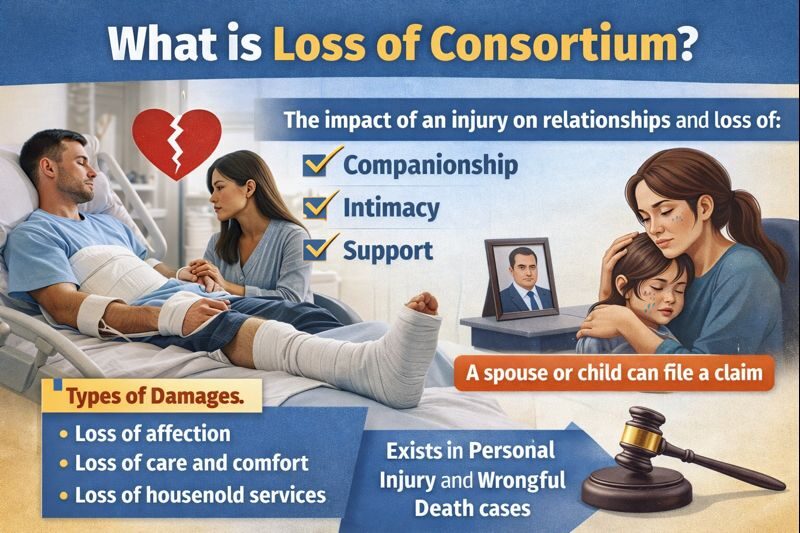
Loss of consortium is a legal claim that allows a spouse to seek compensation when their partner suffers a serious injury caused by someone else’s negligence. This claim addresses the loss of companionship, affection, sexual relations, household services, and emotional support that results from the injury. The uninjured spouse files this claim separately from the injured person’s lawsuit, and it recognizes that serious injuries affect entire families, not just the victim. Compensation varies widely based on the severity of the injury, the strength of the marriage, and state-specific laws governing these claims.
When someone suffers a catastrophic injury in an accident, the physical and financial toll extends far beyond the injured person. Spouses often watch their partners transform from active, engaged companions into individuals requiring constant care and support. According to research from the American Bar Association, loss of consortium claims have increased by 34% over the past decade as courts increasingly recognize the profound impact serious injuries have on family relationships. These claims now represent a significant component of personal injury litigation, with average settlements ranging from $50,000 to over $500,000 depending on case circumstances.
The legal system acknowledges that marriage creates a partnership where both individuals contribute to and benefit from the relationship in tangible and intangible ways. When a third party’s negligence destroys or severely damages this partnership, the law provides a remedy through loss of consortium claims. These cases require careful documentation of how the injury changed the marital relationship, from intimate moments to daily routines. Understanding this legal concept helps families recognize their full rights after a devastating injury and ensures they pursue complete compensation for all damages suffered.
What is Loss of Consortium?
Loss of consortium represents a distinct legal claim that belongs to the spouse of an injured person, not the injured person themselves. This claim compensates for the deprivation of the benefits of a family relationship due to injuries caused by a defendant’s wrongful act. The concept dates back to English common law, where it originally applied only to husbands whose wives were injured, reflecting outdated views about marital relationships and property rights.
Modern loss of consortium claims recognize that both spouses suffer when one partner sustains serious injuries. The claim encompasses several key elements that courts evaluate when determining compensation. These elements include the loss of companionship and society, which refers to the everyday interactions, conversations, and shared experiences that make up married life. When an injury leaves someone bedridden, cognitively impaired, or emotionally withdrawn, their spouse loses the person they married in fundamental ways.
Sexual relations form another critical component of consortium claims. Courts recognize that physical intimacy represents an important aspect of marriage, and injuries that eliminate or severely restrict this dimension of the relationship cause real harm to the uninjured spouse. This element often proves challenging to discuss in legal proceedings, but experienced attorneys understand its significance and present evidence respectfully while emphasizing its importance to marital bonds.
The Practical Impact of Loss of Consortium on Daily Life
Loss of consortium extends to the practical aspects of marriage that many people take for granted until they disappear. Household services represent one such area. When an injury prevents someone from cooking, cleaning, maintaining the home, or caring for children, their spouse must absorb these responsibilities while simultaneously dealing with emotional trauma and potentially working extra hours to cover medical expenses.
The loss of moral support and guidance affects spouses in profound ways that financial calculations struggle to capture. Many people rely on their partners for advice, emotional stability during difficult times, and shared decision-making about important life choices. When brain injuries, chronic pain, or psychological trauma from an accident change someone’s personality or cognitive abilities, their spouse loses their trusted advisor and emotional anchor.
Courts also consider the loss of protection and assistance that the injured spouse previously provided. This element recognizes that spouses look out for each other’s wellbeing in countless ways throughout daily life. An injury that requires the previously healthy spouse to become a full-time caregiver reverses this dynamic entirely, creating stress and burden where support once existed.
Who Can File Loss of Consortium Claims
State laws determine exactly who qualifies to bring loss of consortium claims, and these rules vary significantly across the country. In most jurisdictions, only legal spouses can file these claims. Common-law marriages receive recognition in states that acknowledge such unions, but unmarried partners, including long-term domestic partners, typically cannot pursue consortium claims regardless of their relationship’s length or depth.
Some progressive states have expanded standing to include registered domestic partners or civil union partners. California, for example, allows registered domestic partners to file loss of consortium claims on the same basis as married spouses. New Jersey extends this right to civil union partners. However, these remain exceptions rather than the rule, and most states maintain traditional marriage requirements.
Children and Loss of Consortium
A growing number of states now recognize that children also suffer when a parent sustains catastrophic injuries. Approximately 30 states currently allow minor children to file claims for loss of parental consortium. These claims acknowledge that children lose guidance, nurturing, training, and the everyday presence of an active parent when serious injuries occur.
The standards for children’s claims often differ from spousal claims. Courts typically require evidence of the parent-child relationship’s quality before the injury, the child’s age and developmental stage, and specific ways the injury disrupted the parent’s ability to fulfill their parental role. A young child who loses years of active parenting due to a father’s traumatic brain injury faces different circumstances than a teenager whose parent suffers injuries just before they leave for college.
Some states limit children’s consortium claims to specific types of injuries or require that the parent’s injuries meet certain severity thresholds. These restrictions aim to prevent an explosion of claims in every personal injury case while still providing remedies in truly devastating situations.
Parents and Other Family Members
Very few states allow parents to bring loss of consortium claims when their adult children suffer injuries. The legal theory behind consortium claims focuses on the unique nature of the marital relationship and the legal rights and obligations spouses owe each other. Parent-child relationships, while emotionally profound, don’t carry the same legal framework in most jurisdictions.
Hawaii and Massachusetts represent rare exceptions, permitting parents to file claims when their children suffer catastrophic injuries. These states recognize that parents who must care for severely injured adult children experience losses similar to those suffered by spouses. However, even in these states, the claims face stricter scrutiny and often require proof of extraordinary circumstances.
Siblings, extended family members, and fiancés generally cannot file loss of consortium claims under any circumstances. The law draws clear boundaries around which relationships qualify for this type of compensation, even when other family members suffer genuine emotional and practical hardships due to a loved one’s injuries.
Types of Injuries That Support Consortium Claims
Not every injury justifies a loss of consortium claim. Courts and insurance companies expect these claims to accompany serious, life-altering injuries rather than temporary conditions that heal within weeks or months. The injury must substantially impair the marital relationship in meaningful, lasting ways.
Traumatic brain injuries frequently give rise to consortium claims because they often change personality, cognitive function, and emotional regulation. A spouse who suffers a severe TBI might lose memories of their relationship, develop aggressive tendencies, or require constant supervision. These changes destroy the partnership that existed before the injury, even though the injured person survives.
Spinal cord injuries resulting in paralysis represent another common basis for consortium claims. Paraplegia and quadriplegia eliminate many physical aspects of marriage, require extensive caregiving, and often lead to depression and other psychological challenges that further strain relationships. The permanence of these injuries and their comprehensive impact on daily life make them strong candidates for consortium claims.
Permanent Disfigurement and Amputation
Severe burns, facial injuries, and amputations can support consortium claims when they substantially affect the marital relationship. While society has made progress in accepting people with visible differences, the reality remains that dramatic changes in physical appearance can impact intimacy, social activities, and the injured person’s self-esteem in ways that ripple through the marriage.
The key factor isn’t the injury’s visibility but rather its effect on the relationship. An amputation that prevents a spouse from participating in activities the couple enjoyed together, requires prosthetics that complicate physical intimacy, or leads to chronic pain and depression affecting the person’s ability to engage with their partner creates grounds for a consortium claim.
Psychological and Emotional Injuries
Post-traumatic stress disorder and other psychological injuries can devastate marriages as completely as physical injuries. A spouse who develops severe PTSD after a traumatic accident might become emotionally unavailable, suffer nightmares that prevent restful sleep for both partners, avoid situations that trigger memories, or struggle with anger and irritability that create constant tension.
Courts increasingly recognize that psychological injuries deserve the same consideration as physical ones in consortium claims. However, these cases require strong medical evidence documenting the diagnosis, treatment, and prognosis. Insurance companies often challenge psychological injury claims more aggressively than physical injury claims, making expert testimony essential.
How to Prove a Loss of Consortium Claim
Proving loss of consortium requires more than simply showing that your spouse suffered serious injuries. You must demonstrate specific, concrete ways the injury changed your marriage and diminished the benefits you received from the relationship. This proof comes from multiple sources and requires careful preparation.
Personal testimony forms the foundation of most consortium claims. The uninjured spouse must be willing to discuss intimate details of their marriage, both before and after the injury. This testimony should cover daily routines, shared activities, communication patterns, physical intimacy, and emotional connection. Specific examples carry more weight than general statements. Rather than saying “we were close,” effective testimony explains “we cooked dinner together every night, discussing our days while we prepared meals, and those conversations helped us stay connected.”
Before-and-after comparisons help judges and juries understand the relationship’s transformation. Photo albums, videos, and social media posts from before the injury show the couple’s activities and apparent happiness. Contrasting these with current circumstances creates a powerful narrative about what was lost.
Medical Evidence and Expert Testimony
Medical records documenting the injured spouse’s condition, treatment, and prognosis provide the factual foundation for consortium claims. These records must show that the injuries are permanent or long-lasting and that they substantially limit the injured person’s ability to participate in marital activities.
Expert witnesses, including physicians, psychologists, and life care planners, help explain how specific injuries affect relationships. A neuropsychologist might testify about how traumatic brain injuries change personality and emotional regulation. A urologist might explain how spinal cord injuries affect sexual function. These experts translate medical facts into understandable explanations of relationship impacts.
Vocational experts sometimes testify in consortium cases, particularly when the injured spouse’s inability to work creates additional stress on the marriage. Financial strain represents a recognized component of consortium losses, especially when the uninjured spouse must reduce their own work hours to provide care.
Testimony from Friends and Family
Third-party witnesses who knew the couple before and after the injury provide valuable corroboration. Friends can describe how the couple interacted at social gatherings, their apparent affection for each other, and shared interests. Family members might testify about holiday celebrations, family trips, or the couple’s parenting partnership before the injury.
These witnesses also describe changes they’ve observed since the injury. A friend might explain that the couple no longer attends social events they previously enjoyed. A parent might testify that their child seems isolated and overwhelmed by caregiving responsibilities. This outside perspective helps establish that the changes are real and observable, not exaggerated for litigation purposes.
Calculating Damages in Consortium Claims
Loss of consortium damages don’t follow standard formulas like medical expenses or lost wages. No calculator determines the value of lost companionship or diminished intimacy. Instead, these damages fall into the category of non-economic losses, where juries exercise considerable discretion based on the evidence presented.
Several factors influence consortium claim values. The marriage’s length and quality before the injury matter significantly. A couple married for 25 years with a strong, loving relationship typically receives higher consortium awards than newlyweds still establishing their partnership. However, this doesn’t mean young couples can’t recover substantial damages, particularly when the injury eliminates decades of anticipated companionship.
The injured spouse’s age affects calculations because it determines how many years the uninjured spouse will live with the consequences. A 30-year-old who suffers permanent paralysis creates consortium losses spanning potentially 50 or more years. A 70-year-old with the same injury presents a shorter timeframe, though the losses during those years may be equally profound.
Severity and Permanence of Injuries
The injury’s severity directly correlates with consortium damages. Complete paralysis, severe brain damage, or injuries requiring constant care typically generate higher awards than injuries that, while serious, allow the injured spouse to maintain some independence and participation in the relationship.
Permanence matters tremendously. Injuries expected to improve over time support lower consortium awards than permanent conditions. Medical testimony about prognosis becomes crucial here. If doctors testify that the injured spouse might regain some function through rehabilitation, consortium damages may be reduced to account for potential improvement.
The Uninjured Spouse’s Burden
Courts consider the caregiving burden placed on the uninjured spouse. Someone who must provide round-the-clock care, manage complex medical equipment, or handle all household responsibilities alone while working full-time experiences greater losses than someone whose injured spouse maintains substantial independence.
The emotional toll on the uninjured spouse factors into damages as well. Depression, anxiety, and stress-related health problems that develop in response to the spouse’s injury and the changed relationship demonstrate the claim’s legitimacy and severity.
The Legal Process for Filing Consortium Claims
Loss of consortium claims typically proceed as part of the injured spouse’s personal injury lawsuit, though they remain legally distinct claims. The uninjured spouse must be named as a plaintiff in the lawsuit, and the complaint must specifically allege consortium losses with supporting factual allegations.
Some jurisdictions require consortium claims to be filed simultaneously with the injured spouse’s claim. Others allow them to be added later, though waiting risks procedural complications. Consulting with an experienced personal injury attorney early ensures proper claim filing and preservation of all rights.
The discovery process in cases involving consortium claims extends beyond the injured person’s medical condition. Defense attorneys will request information about the marriage’s quality before the injury, including any prior separations, counseling, or problems. They may ask about the uninjured spouse’s medical history, particularly any mental health treatment that might suggest pre-existing emotional issues unrelated to the injury.
Depositions and Privacy Concerns
Both spouses typically face depositions where defense attorneys ask detailed questions about their relationship. These depositions can feel invasive and uncomfortable, particularly when questions address intimate aspects of marriage. However, the uninjured spouse opened these topics by filing a consortium claim, and courts allow broad questioning on relevant issues.
Privacy concerns sometimes discourage people from pursuing consortium claims. The prospect of discussing sexual relations, marital conflicts, and personal struggles in depositions and potentially at trial causes understandable anxiety. However, experienced attorneys help clients prepare for these discussions and object to truly improper questions that cross legal boundaries.
Settlement Negotiations
Most personal injury cases, including those with consortium claims, settle before trial. Insurance companies evaluate consortium claims based on similar cases in the jurisdiction, the strength of the evidence, and the couple’s credibility. Strong medical evidence of permanent, severe injuries combined with compelling testimony about a previously healthy marriage typically generates reasonable settlement offers.
Consortium claims add value to settlement negotiations because they increase the defendant’s potential exposure. A case that might settle for $500,000 based solely on the injured person’s damages might settle for $650,000 when a strong consortium claim is included. However, insurance companies also know that juries sometimes reject consortium claims they view as exaggerated, creating leverage for defendants during negotiations.
Common Challenges and Defenses
Defense attorneys employ several strategies to defeat or minimize consortium claims. Understanding these defenses helps claimants prepare stronger cases and avoid common pitfalls.
The most frequent defense attacks the marriage’s quality before the injury. Defense attorneys search for evidence of prior problems, separations, or counseling that suggests the relationship was already troubled. Social media posts, text messages, and testimony from friends or family members can provide ammunition for this defense. A couple who frequently argued, lived separately, or discussed divorce before the injury faces an uphill battle proving consortium losses.
Some defendants argue that the injured spouse’s recovery exceeded initial predictions, reducing or eliminating consortium losses. Medical records showing improvement, surveillance video of the injured spouse engaging in activities, or testimony about resumed marital activities support this defense. This approach works best when significant time passes between the injury and trial, allowing for recovery that wasn’t apparent when the lawsuit was filed.
Comparative Fault and Contribution
In cases where the injured spouse bears some responsibility for the accident, defendants argue that consortium damages should be reduced proportionally. If a jury finds the injured spouse 30% at fault for a car accident, the consortium claim might also be reduced by 30%. This defense varies by state, as some jurisdictions don’t apply comparative fault principles to derivative claims like loss of consortium.
Defense attorneys sometimes argue that the uninjured spouse’s own actions contributed to relationship problems. If the uninjured spouse had an affair, moved out, or filed for divorce after the injury, defendants claim these actions, not the injury, caused the consortium losses. These defenses require careful navigation, as courts recognize that catastrophic injuries create enormous stress that can lead to relationship problems without negating the underlying consortium claim.
Statute of Limitations Issues
Each state sets time limits for filing consortium claims, and these deadlines don’t always match the injured spouse’s claim deadline. Missing the statute of limitations deadline destroys the consortium claim entirely, regardless of its merits. Some states require consortium claims to be filed within the same timeframe as the underlying injury claim, while others provide separate deadlines.
Tolling provisions that extend deadlines for injured parties don’t always apply to consortium claims. For example, if the injured spouse was a minor when the accident occurred, their claim deadline might be tolled until they reach adulthood, but the spouse’s consortium claim might face the standard deadline. These technical issues require careful attention from qualified personal injury attorneys.
State-Specific Variations in Consortium Law
Loss of consortium law varies dramatically across states, affecting who can file claims, what damages are recoverable, and how cases proceed. Understanding your state’s specific rules is essential for pursuing these claims effectively.
Community property states like California, Texas, and Arizona sometimes treat consortium claims differently than common law property states. In community property jurisdictions, both spouses may have automatic interests in personal injury claims, affecting how consortium damages are allocated and whether separate claims are necessary.
Some states cap non-economic damages in personal injury cases, and these caps may apply to consortium claims. Texas, for example, limits non-economic damages in medical malpractice cases to $250,000 per defendant, which can include consortium losses. These caps significantly affect case values and settlement strategies.
States with Unique Approaches
Florida requires consortium claims to be filed in the same lawsuit as the injured spouse’s claim and prohibits separate trials on consortium issues. This rule aims to prevent inconsistent verdicts where a jury might find for the injured spouse but against the consortium claim.
New York recognizes loss of consortium claims but historically limited them to cases involving permanent, total loss of services. Recent decisions have relaxed this standard somewhat, but New York juries still award consortium damages less frequently than juries in many other states.
Illinois allows consortium claims but requires the uninjured spouse to prove that the injury caused a “real and substantial” loss of consortium. This standard sets a higher bar than some states, where any significant impairment of the marital relationship may suffice.
Jurisdictions That Don’t Recognize Consortium Claims
A handful of states don’t recognize loss of consortium claims at all or severely restrict them. Louisiana, operating under a civil law system rather than common law, handles these claims differently through its legal framework. Understanding whether your state recognizes these claims before investing time and resources in pursuing them prevents wasted effort.
Even in states that recognize consortium claims, some jurisdictions prove more favorable than others based on jury attitudes, typical award amounts, and procedural rules. Experienced local attorneys understand these nuances and can advise whether pursuing a consortium claim makes strategic sense in a particular case.
Conclusion
Loss of consortium claims provide essential recognition that serious injuries devastate entire families, not just the person who suffered physical harm. These claims compensate spouses for the profound losses they experience when accidents transform their partners and destroy the marriages they built together. While proving consortium losses requires discussing intimate details of relationships and facing skeptical defense attorneys, the compensation recovered acknowledges real suffering and helps families cope with changed circumstances.
The legal landscape surrounding consortium claims continues evolving as courts recognize that modern marriages involve partnerships between equals and that various family structures deserve legal protection. Understanding your rights, gathering strong evidence of your relationship before and after the injury, and working with experienced attorneys gives you the best chance of recovering fair compensation for consortium losses. If your spouse suffered catastrophic injuries due to someone else’s negligence, don’t overlook the consortium claim that belongs to you personally. These claims often represent significant value and provide validation that your losses matter under the law. Consult with a qualified personal injury attorney in your state to evaluate whether a loss of consortium claim makes sense for your situation and to ensure you meet all deadlines and procedural requirements for pursuing this important legal remedy.