
Exchanging Information After a Car Accident: A Step-by-Step Guide
Posted by Wetherington Law Firm | Car Accidents
TL;DR: After a car accident, you must collect specific information from the other driver to protect your rights and file a successful insurance claim. Calmly and methodically gather the other driver’s full name, address, and phone number. Also, get their driver’s license number, the name of their auto insurance company, and their policy number. Document their vehicle’s license plate number, make, model, and color. Use your phone to take extensive photos of the vehicle damage, the accident scene, and relevant documents like insurance cards. If there are witnesses, get their names and contact information. This collection of facts is the foundation of your insurance claim and any potential legal action.
Key Highlights
- Driver Information: Collect full name, address, and phone number.
- License & Vehicle Details: Get the driver’s license number, license plate number, and the vehicle’s make, model, and year.
- Insurance Policy: Obtain the insurance company’s name and the policy number.
- Scene Documentation: Take photos of all vehicle damage, the position of the cars, skid marks, and traffic signs.
- Witnesses: If anyone saw the collision, ask for their name and phone number.
- Police Report: Call the police, especially if there are injuries or significant damage. An official report is a critical piece of evidence.
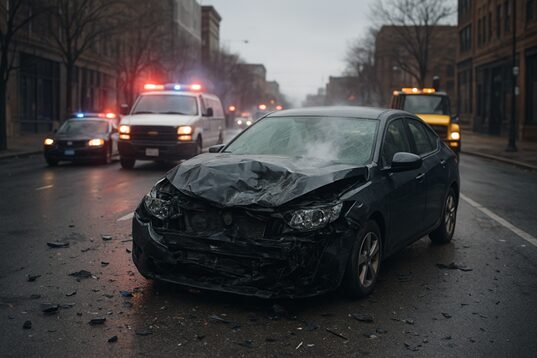
Every year, millions of vehicle crashes occur on U.S. roadways. The National Highway Traffic Safety Administration (NHTSA) reports that over 5 million police-reported traffic crashes happened in a recent year, ranging from minor fender-benders to serious incidents. While every collision is different, one constant remains: the moments immediately following the impact are crucial. The actions you take, and the information you gather, can significantly influence the outcome of your insurance claim and protect you from future disputes.
In every state, drivers involved in a collision have a legal duty to stop, check for injuries, and exchange key pieces of information. This isn’t just a courtesy; it’s the law. Failing to stop at the scene of an accident, particularly one involving injury, can lead to serious criminal charges, often classified as a hit-and-run. These laws are in place to ensure that all parties involved can be held accountable and that those who have suffered losses can seek proper compensation through the insurance system.
Understanding exactly what information to collect is the first and most important step toward a successful resolution. A complete and accurate record of the event empowers you and your insurance company to establish fault and process your claim efficiently. The quality of the data you gather at the scene directly correlates to the strength of your position. This process removes guesswork and replaces it with facts, providing a clear picture of what happened for insurance adjusters and, if needed, legal professionals.
The Essential Checklist After a Car Accident: What Information to Collect from the Other Driver
When you are at the scene of a crash, your mind may be racing. Adrenaline can make it difficult to think clearly. This is why having a mental or physical checklist is so important. The information you collect forms the backbone of your insurance claim. Without it, your insurer will have a difficult time processing your request for compensation for vehicle repairs or medical bills.
1. Personal and Contact Details
This is the most basic yet vital information. You need to know who was involved in the incident. Politely ask the other driver for their full cooperation.
- Full Name: Get their complete legal name as it appears on their driver’s license. Avoid nicknames.
- Current Address: Ask for their home address. This is used by insurance companies for official correspondence.
- Phone Number: A direct contact number is essential for follow-up communication by insurance adjusters.
- Email Address: In today’s world, an email address can be a useful secondary point of contact.
Why it matters: This information identifies the person responsible for the vehicle. If you later need to file a lawsuit, your car accident attorney will need these details to formally name the defendant in the legal filings.
2. Driver’s License and Vehicle Information
Next, you need to connect the person to their legal right to drive and the specific vehicle they were operating. Never just take someone’s word for it; ask to see the physical documents.
- Driver’s License Number: Request to see their driver’s license and write down the number and the state that issued it. You can take a clear photo of the license with your smartphone.
- License Plate Number: Record the license plate number and the state of registration. This is one of the easiest ways to identify a vehicle. Take a picture of the plate.
- Vehicle Description: Note the make, model, year, and color of the other car. For example, “a blue 2019 Honda Civic.”
- Vehicle Identification Number (VIN): If possible, find the VIN. It’s usually visible on a small plate on the driver’s side dashboard, viewable through the windshield. A photo of this is perfect.
Why it matters: The driver’s license number confirms their identity and driving status. The license plate and VIN are unique identifiers for the vehicle, which helps insurers confirm coverage and track the car’s history. If a driver provides false personal information, the license plate can be a reliable way to find the registered owner.
3. Insurance Policy Details
This is the key to financial recovery for your damages. A driver might be personally responsible, but it is their insurance company that will typically pay for the damages.
- Insurance Company Name: Get the name of their auto insurance provider (e.g., State Farm, Geico, Progressive).
- Policy Number: This is the most important piece of insurance information. It is the unique identifier for their coverage.
- Agent’s Name and Phone Number (if available): Some insurance cards list the agent’s contact information, which can sometimes be helpful.
Pro Tip: Ask to see the driver’s insurance card. Take a clear, readable photo of it with your phone. This prevents errors from writing the information down incorrectly. Verify that the policy is current by checking the effective and expiration dates on the card.
Beyond the Basics: Documenting the Scene for a Stronger Claim
The information exchanged between drivers is only part of the story. The physical evidence at the scene provides objective proof of what happened. Your smartphone is your most powerful tool for this task. A thorough documentation of the scene can make the difference between a simple claim and a lengthy dispute.
4. The Power of Photography: What to Capture
Photos and videos serve as undeniable evidence. They can show the extent of the damage, the conditions of the road, and the final resting places of the vehicles. Take more photos than you think you need from various angles and distances.
- Damage to All Vehicles: Take close-up shots of the damaged areas on your car and the other vehicle(s). Also, take photos from further away to show the damaged section in the context of the whole car.
- License Plates: Get clear shots of the license plates of all involved vehicles.
- The Entire Scene: Step back and take wide-angle photos of the entire accident scene from multiple vantage points. This can help establish how the collision occurred.
- Road Conditions and Debris: Photograph any skid marks, broken glass, or other debris on the road. Also, capture the weather conditions, road construction, or any potential hazards that may have contributed to the crash.
- Traffic Signs and Signals: Take pictures of any nearby stop signs, traffic lights, or speed limit signs. This can be crucial in disputes over right-of-way.
5. Identifying and Speaking with Witnesses
Independent witnesses can be incredibly valuable. Their testimony is often seen as unbiased by insurance companies and juries because they have no financial stake in the outcome.
- How to Approach: If people have stopped, politely ask if they saw the collision. If they did, ask if they would be willing to provide their contact information.
- What Information to Get: You need their full name and a reliable phone number. If they are willing, you can ask them for a brief summary of what they saw and record it in your phone’s notes app or as a voice memo (with their permission).
- Do Not Pressure Them: If a witness is hesitant, do not push. Simply getting their name and number is a huge win. Your insurance company or attorney can contact them later for a formal statement.
6. Your Own Notes: Creating a Personal Record
While the scene is still fresh in your mind, create your own written record of the event. This can help you recall details later when speaking with an insurance adjuster.
- Basic Facts: Write down the date, time, and specific location of the crash. Use a cross-street or a nearby address for precision.
- Sequence of Events: Describe, in your own words, what happened. Note your direction of travel, the other driver’s direction, and the sequence of events leading to the impact.
- Diagram of the Scene: A simple sketch showing the positions of the cars, street names, and traffic signals can be very helpful.
- Police Information: If law enforcement responds, get the officers’ names, badge numbers, and the police report number.
The Role of Law Enforcement: When and Why to Call the Police
Many drivers are unsure whether they should call 911 after a minor collision. While it may seem like an inconvenience, involving the police is almost always a good idea. An official police report is a powerful document that can simplify the claims process.
7. When a Police Report is Mandatory
In many states, you are legally required to report a car accident to the police under certain circumstances. While laws vary, they generally include:
- Any Injury or Fatality: If anyone involved, including drivers, passengers, or pedestrians, reports any level of pain or injury, you must call the police.
- Significant Property Damage: Most states set a monetary threshold for property damage. If the damage appears to exceed a certain amount (e.g., $1,000 or $2,500), a report is required. Since it’s hard to estimate repair costs at the scene, it’s safest to call if the damage is more than a small scratch.
- A Driver is Intoxicated: If you suspect the other driver is under the influence of alcohol or drugs, call 911 immediately.
- A Driver is Uncooperative or Flees: If the other driver refuses to provide information or leaves the scene, the incident becomes a criminal matter.
The Benefits of an Official Police Report
Even if the accident is minor and a report isn’t legally required, it’s still wise to request one.
- Unbiased Third-Party Account: The police report provides a neutral summary of the incident. The officer will document the scene, collect information from all parties, and may even include a preliminary determination of fault.
- Consolidated Information: The report will contain all the essential driver, vehicle, and insurance information in one place, which is very convenient for your insurance claim.
- Evidence for Your Claim: Insurance adjusters give significant weight to the details in a police report. It can help prevent the other driver from changing their story later.
What to Do While Waiting for the Police
If you call the police, it may take some time for an officer to arrive. Use this time productively.
- Ensure Safety: If possible and safe, move your vehicles out of active traffic lanes to a nearby shoulder or parking lot. Turn on your hazard lights.
- Check for Injuries: Check on yourself, your passengers, and the occupants of the other vehicle.
- Begin Your Own Information Exchange: Do not wait for the police to start gathering the information outlined above. You can collect names, insurance details, and photos while you wait.
What NOT to Share: Protecting Yourself After a Collision
Just as important as knowing what information to collect is knowing what not to say or share. In the stressful moments after a crash, it’s easy to say something that could be misinterpreted and used against you later. Your goal is to be cooperative and polite without jeopardizing your claim.
Avoid Admitting Fault
The most common mistake people make is apologizing. Saying “I’m so sorry” can be interpreted as an admission of legal guilt, even if you were just trying to be polite.
- Stick to the Facts: When discussing the accident with the other driver, only state objective facts. For example, say “Your car and my car collided in the intersection,” not “I’m sorry, I didn’t see you.”
- Let the Investigation Determine Fault: You may not have all the information about what caused the crash. Perhaps the other driver was speeding or distracted. Let the insurance companies and police investigate and determine liability based on the evidence.
Limit Discussion of Injuries
Adrenaline can mask pain. You might feel fine at the scene, only to wake up the next day with severe neck or back pain.
- Avoid Saying “I’m Not Hurt”: If the other driver or the police ask if you are injured, a safe response is, “I’m not sure, I’ll have to get checked out by a doctor.”
- Seek Medical Attention: It is always a good idea to see a medical professional after any car crash, even a seemingly minor one. This creates a medical record connecting any injuries to the accident.
Do Not Share Your Social Security Number or Financial Information
There is absolutely no reason for another driver to need your Social Security number, bank details, or other sensitive personal financial information.
- Politely Decline: If someone asks for this information, you can politely refuse. The only information they need is your name, contact details, driver’s license, and insurance policy.
- Be Wary of Scams: Sharing this kind of information can expose you to identity theft. Stick to the standard exchange protocol.
Be Cautious with Social Media
In the age of social media, it’s tempting to post about major life events, including a car accident. This is a bad idea.
- Insurance Companies are Watching: Insurance adjusters for the other party may search your social media profiles for any information they can use to deny or reduce your claim. A photo of you engaging in physical activity could be used to argue that your injuries are not as severe as you claim.
- Keep Your Case Private: The best policy is to refrain from posting anything about the accident, your injuries, or your recovery until your claim is fully resolved.
Handling Difficult Situations: Uncooperative Drivers and Uninsured Motorists
Ideally, the other driver will be calm, cooperative, and insured. Unfortunately, this is not always the case. Knowing how to handle challenging scenarios is key to protecting yourself when things go wrong.
When the Other Driver Refuses to Cooperate
If the other driver is angry, aggressive, or simply refuses to provide their information, your priority is to stay safe.
- Do Not Escalate: Do not get into an argument. Stay calm and, if you feel threatened, return to your vehicle and lock the doors.
- Call the Police Immediately: This situation now requires law enforcement intervention. Explain to the 911 dispatcher that the other driver is refusing to exchange information. Their refusal is a violation of the law.
- Gather What You Can: While waiting for the police, discretely use your phone to take a picture of the other car, its license plate, and if possible, the driver. This information will be vital if they decide to leave the scene.
Dealing with an Uninsured or Underinsured Driver
You may find that the other driver is honest and cooperative but admits they do not have car insurance. This changes how your claim will be handled.
- Call the Police: An official report is essential in this situation. The police will document that the other driver was uninsured, which is illegal in nearly every state.
- Use Your Own Coverage: This is where your own insurance policy becomes critical. If you have Uninsured/Underinsured Motorist (UM/UIM) coverage, your own insurance company will step in to cover your medical bills and, in some states, your vehicle repairs.
- Collision Coverage: If you have collision coverage on your policy, you can use it to repair your vehicle, though you will have to pay your deductible. Your insurer may then try to recover the costs (including your deductible) from the at-fault, uninsured driver directly, a process called subrogation.
Using Technology to Your Advantage: Modern Tools for Information Exchange
Technology has made the process of collecting information after an accident easier and more accurate than ever before. Your smartphone can be a comprehensive tool for documenting every aspect of the scene.
Smartphone Apps from Your Insurer
Most major auto insurance companies offer free mobile apps that are designed to help you after a collision.
- Guided Process: These apps often provide a step-by-step guide, prompting you for all the necessary information so you don’t forget anything.
- Easy Photo Uploads: You can take photos of the damage, documents, and the scene directly within the app and upload them instantly to start your claim.
- Instant Claim Filing: Many apps allow you to file your claim right from the roadside, which can significantly speed up the process.
The Voice Memo Function: A Quick Way to Record Details
In a high-stress situation, it can be faster to speak than to type.
- Record Your Own Recollections: Use your phone’s voice recorder to create a detailed audio note for yourself describing how the accident happened, the road conditions, and other key details.
- Document Witness Statements: With a witness’s permission, you can record a brief audio statement of what they saw. This can be more accurate than trying to write it down by hand.
- Capture License Plates: If you can’t write it down quickly, just record yourself saying the license plate number out loud.
Digital Note-Taking and Checklists
Preparation can make a huge difference.
- Create a Checklist: Use your phone’s notes app to create a pre-made car accident checklist. Include every piece of information you need to collect.
- Store Important Documents: Keep digital copies of your own insurance card and vehicle registration in a secure folder on your phone for easy access.
Conclusion: Your First Step Toward Recovery
The minutes following a car accident are a critical window of opportunity. The information you exchange and the evidence you document at the scene lay the groundwork for your entire recovery process. By staying as calm as possible and methodically collecting the essential details driver identification, license and vehicle data, insurance policy numbers, and photographic evidence you take control of the situation. This proactive approach ensures that your insurance company has the facts needed to process your claim fairly and efficiently.
Remembering what not to do is equally important. Avoid admitting fault, speculating about injuries, or sharing unnecessary personal information. These simple precautions protect you from potential liability and prevent the other party’s insurer from using your words against you. When faced with challenges like an uncooperative driver or a hit-and-run, involving law enforcement immediately is your best course of action. A police report provides an official, unbiased record that is invaluable in resolving disputes.
The actions you take at the scene have a direct and lasting impact. A thorough and accurate exchange of information is not just a legal requirement; it is the most powerful step you can take to protect your financial and physical well-being. If you have been in an accident and feel uncertain about your next steps or believe your rights are at risk, do not hesitate to seek professional guidance. Contact a qualified car accident attorney to discuss your situation. A consultation can provide the clarity and support you need to ensure your rights are protected from the very beginning.